Olive Harvest & Young Wine: Why Late-Season Charter Crews Eat Best in Croatia
Croatia October food, wine and harvest by boat: olive picking on Šolta and Brač, young-wine cellars and marenda menus — the case for a shoulder-season charter.
Read more
If you sail Croatia in August, the single skill that saves your evenings is timing. The popular harbours fill by mid-afternoon, and crews who roll in at 18:00 expecting a quay berth are often left circling. The fix is unglamorous but reliable: be off the water and tied up by around 15:00 in the busiest ports, call ahead on VHF or by phone, and carry a plan-B harbour for every overnight stop.
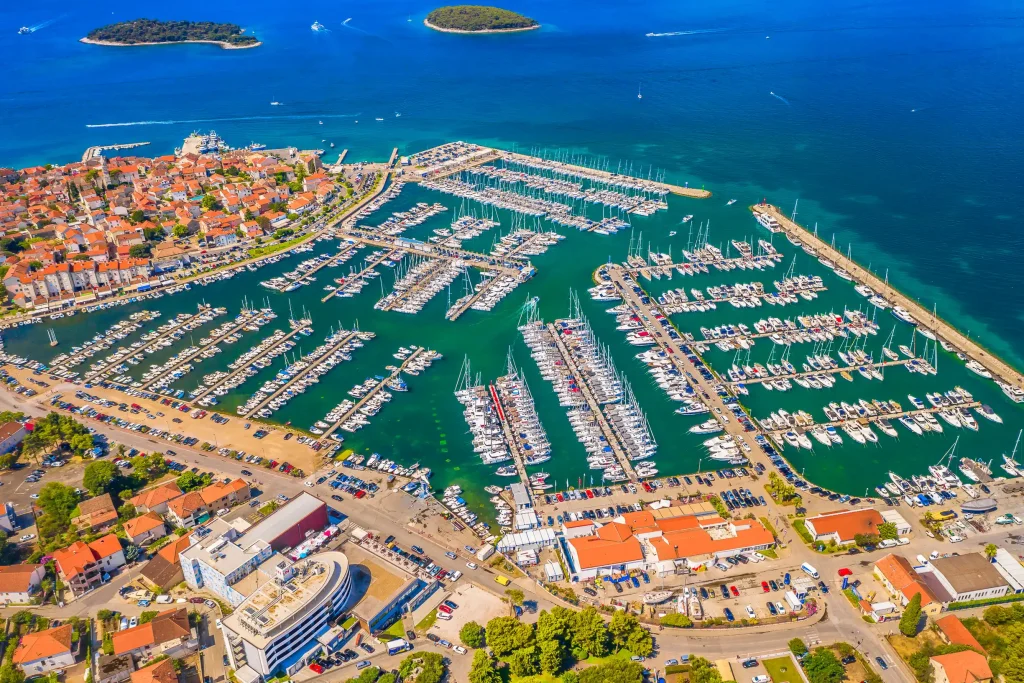
August is the peak of croatia sailing august crowds berths pressure, when the whole Mediterranean charter fleet seems to converge on the same dozen quays. None of it has to ruin your trip. Treat the berth race as a logistics problem with known rules, and you spend your evenings at dinner rather than hunting for somewhere to tie up.
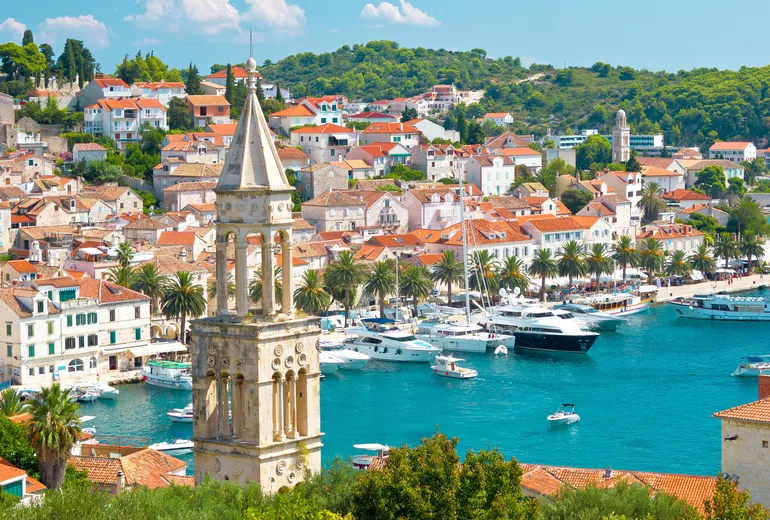
The Adriatic charter season peaks hard in the first three weeks of August. Saturday-to-Saturday turnarounds dump thousands of boats back onto the water on the same morning, Italian and German holidays overlap, and everyone is chasing the same marquee stops: Hvar Town, Korčula, Vis, the Kornati buoys. Demand for quay space outruns supply for those few weeks in a way it simply does not in June or September.
The mechanics are predictable once you see them. Early crews who left the previous base at dawn grab the prime berths by early afternoon, and by 16:00 the marinero is turning boats away or rafting them three deep. Arrive after that and you are choosing between an exposed outer berth, a long raft-up, or motoring on to the next harbour as the light goes. The wind picture matters too, and our guide to the best time to sail Croatia, with the season, wind and crowd breakdown, shows just how sharply August stands apart.
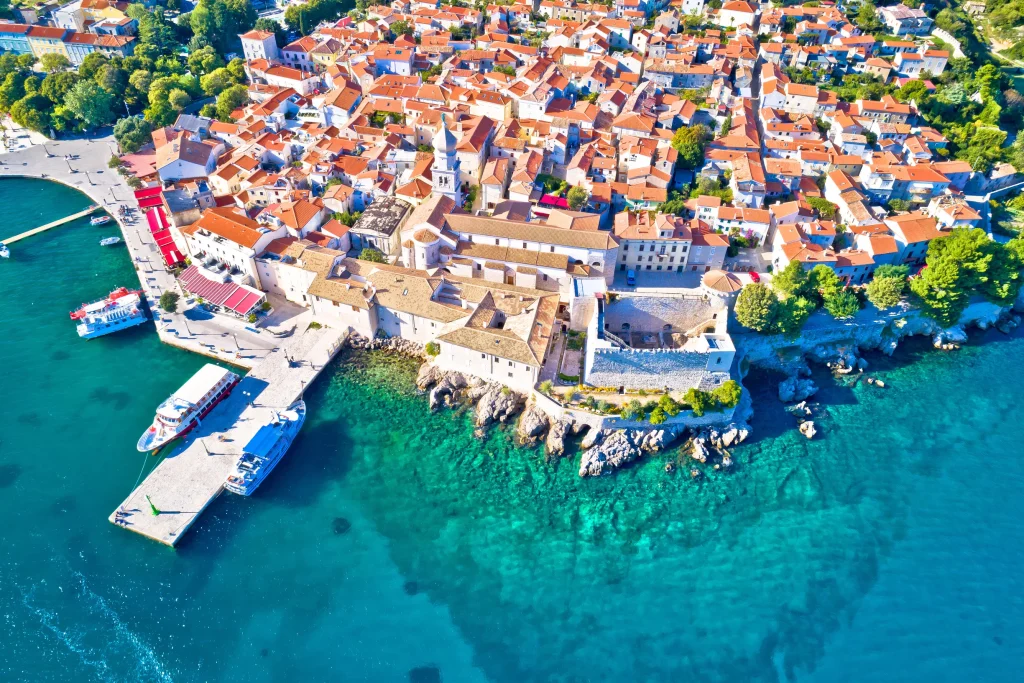
As a rough rule for the busiest harbours in August, aim to be tied up by 14:00–15:00 in Hvar Town, Korčula, Vis Town and Komiža, and the popular Kornati buoy fields. For mid-tier island ports you can stretch to 16:00. For quieter mainland marinas and the plan-B harbours below, you usually have until early evening. The earlier you commit to stopping, the more choice you have, and the less you pay in stress.
Most crews underuse the radio, and it is the cheapest insurance you have. Many marinas monitor VHF channel 17, and a call an hour or two out asking whether they have space for your length and beam can save you a wasted detour. If they are full, you find out with time to divert rather than at the harbour mouth at dusk.
The phone is even better for the smaller spots. Konoba quays and family-run buoy fields rarely answer the radio but will hold a place if you call around lunchtime and say you will dine there. Have your boat length and beam ready, because a wide catamaran is a different puzzle for a harbour master than a slim monohull. A booked marina berth, where the marina allows reservation, removes the gamble entirely for the nights that matter most, and is worth the premium for a fixed restaurant booking ashore.
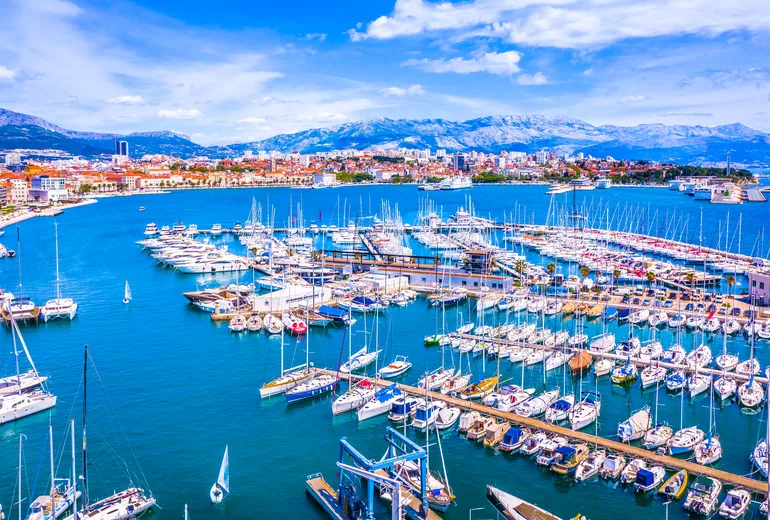
When the quay is packed, the marinero will often raft you alongside another boat rather than turn you away. Done well, rafting is sociable and safe; done badly, it is a night of fenders squealing and tempers fraying. A little etiquette goes a long way. Match springs and breast lines to the boat you raft to, run your own lines ashore where possible, and step across other boats by the foredeck, never through someone’s cockpit.
Keep the noise down, because sound carries across rafted hulls, and coordinate early departures the night before so nobody is untangling lines at 06:00 in the dark. If you are the inside boat, expect crews to climb across you; if you are outside, be ready to slip and re-raft when the inside boat leaves. Handled with good humour, a raft-up turns a full harbour into a row of new acquaintances rather than a problem.
Wide cats are the awkward customers of a crowded August quay. A 45-foot catamaran carries the beam of two and a half monohulls, so a marinero juggling a full harbour may genuinely have no slot for you even when a monohull would squeeze in. Phone ahead with your beam early, accept an end-of-quay or alongside berth gratefully when offered, and have a buoy or anchorage fallback ready. Rafting cats together is fine; rafting a cat onto a monohull rarely is, because the loads and freeboard do not match.
The crews who stay calm are the ones who already know where they will go if they lose the race. For every glamour stop, keep a quieter alternative within an hour or so, ideally one with a buoy field or an anchorage as a final fallback.
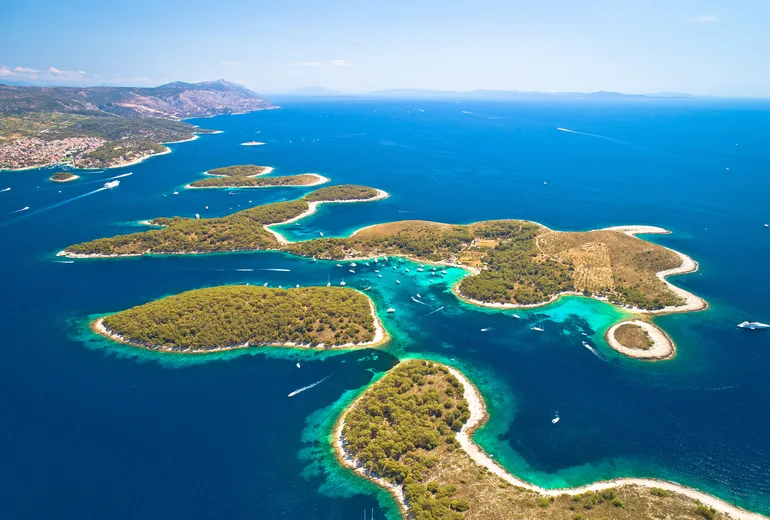
If Hvar Town is full, the Pakleni islands buoys off Palmizana, or Stari Grad and Vrboska on the north of Hvar, take the overflow with room to spare. Milna and Bobovišća on Brač, and Maslinica on Šolta, are calmer bases a short hop away. The whole central cluster, with the best catamarans for it, is laid out in our guide to charter routes from Split through central Dalmatia.
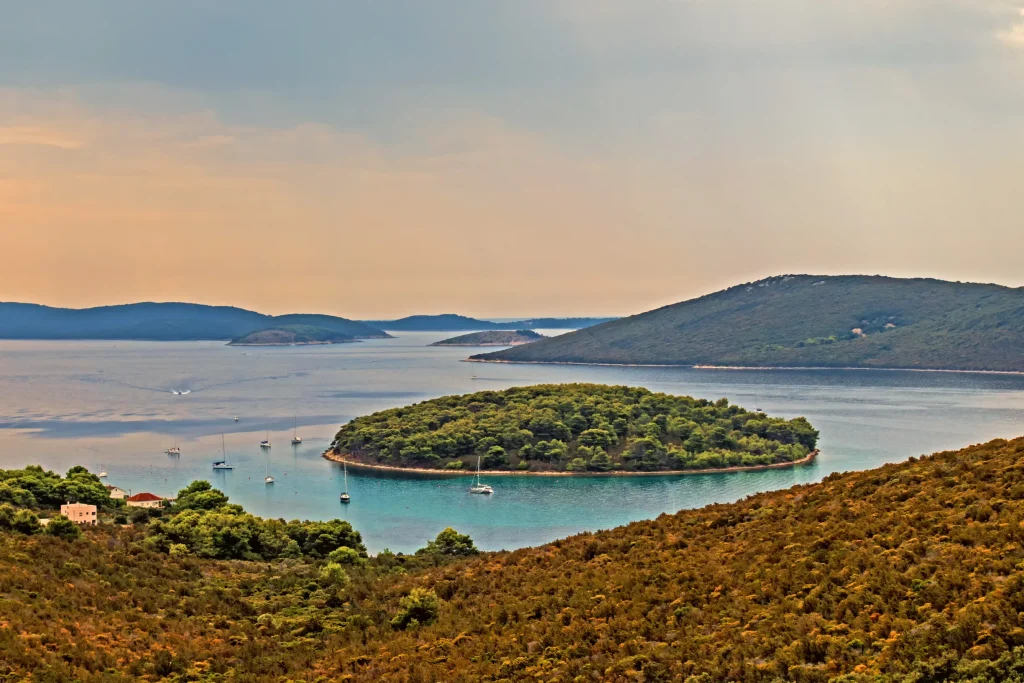
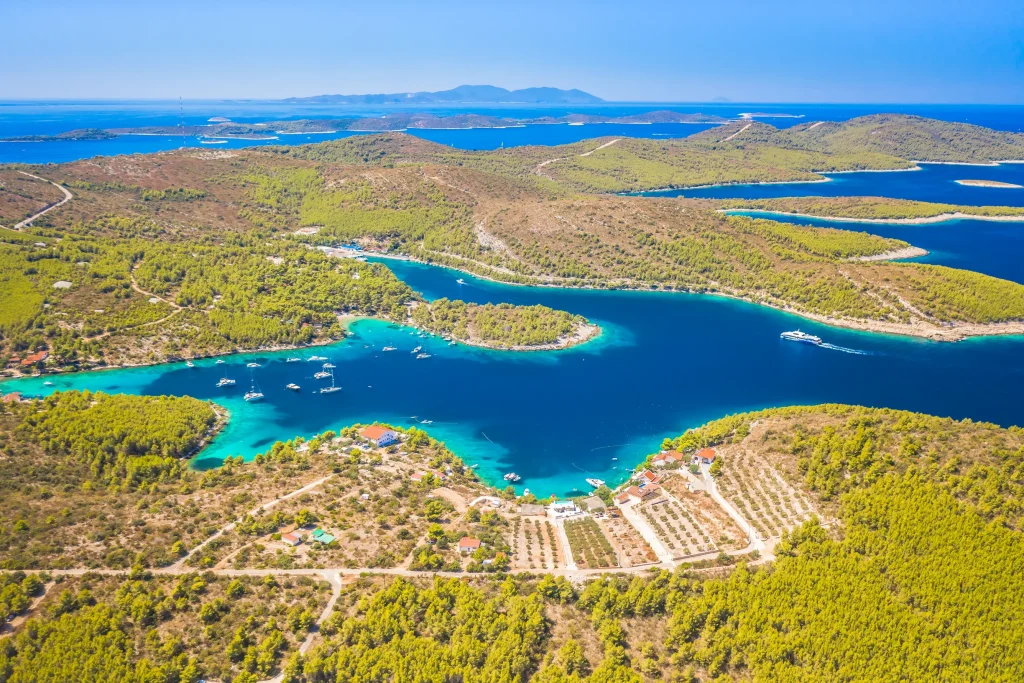
The Kornati buoy fields fill early, so if Žut or Piškera are full, the konoba buoys at Ravni Žakan or a sheltered anchorage in Telašćica are reliable backups. On the mainland, Skradin up the Krka river and the marinas around Šibenik almost always have space and a quieter night, as we cover in our Šibenik routes through Kornati National Park and Krka.
Plan the day backwards from where you want to sleep, not forwards from where you wake. Decide the night before whether tomorrow is a glamour stop or a quiet one, set a realistic arrival target, and identify the fallback before you slip lines. With that one habit, the August berth race stops being a daily source of dread and becomes a problem you have already solved by breakfast.
None of this means avoiding the famous harbours. It means earning them by arriving early, and having somewhere lovely to go on the days you do not. That is how experienced crews enjoy the busiest weeks of the Croatian summer without spending every evening circling a full quay.
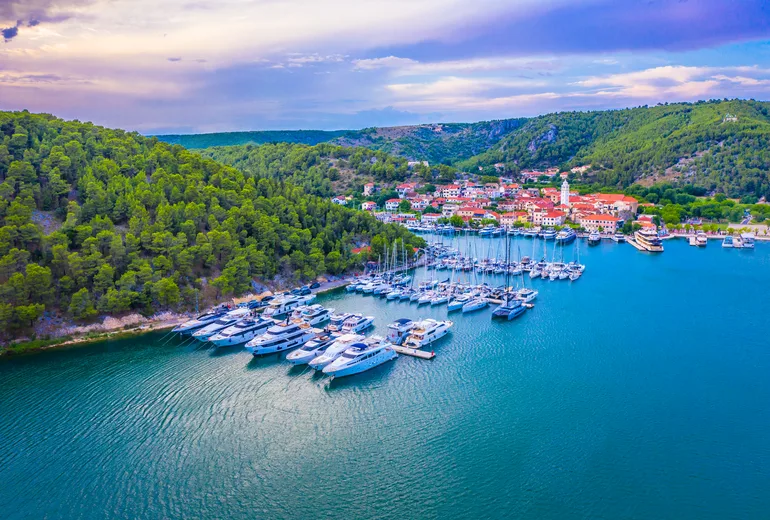
In the busiest ports like Hvar Town, Korčula and Vis, prime quay berths are often gone by mid-afternoon, with marineros rafting boats or turning them away from around 16:00. Aim to be tied up by 14:00–15:00 in those harbours, and you can stretch to early evening at quieter mainland marinas and plan-B stops.
Some marinas, including parts of the ACI network, allow berth reservations, which removes the gamble for nights with a fixed restaurant booking ashore. Many town quays and konoba buoy fields are first-come, but a phone call or VHF shout around lunchtime, with your boat length and beam, often holds you a spot.
Match springs and breast lines to the boat you raft to, run your own lines ashore where you can, and cross other boats by the foredeck rather than through their cockpit. Keep noise down, coordinate early departures the night before, and be ready to slip and re-raft if an inside boat needs to leave.
Yes, because a 45-foot catamaran takes the beam of roughly two and a half monohulls, so a full harbour may have no slot for you even when a monohull would fit. Phone ahead with your beam wherever you can, accept an alongside or end-of-quay berth when offered, and keep a buoy or anchorage as a fallback.
Keep a quieter alternative within an hour of every glamour stop. If Hvar Town is full, try the Pakleni buoys off Palmizana, or Stari Grad and Vrboska; if the Kornati buoys are taken, the Ravni Žakan konoba buoys or Telašćica anchorage, or Skradin up the Krka, are reliable backups.
Want a route that builds in the right arrival times and fallbacks? Plan your week with our Croatia sailing destinations and routes and sail August on your own terms.
Six short questions, then a real reply from a www.croatia-yachting.com broker within four working hours.