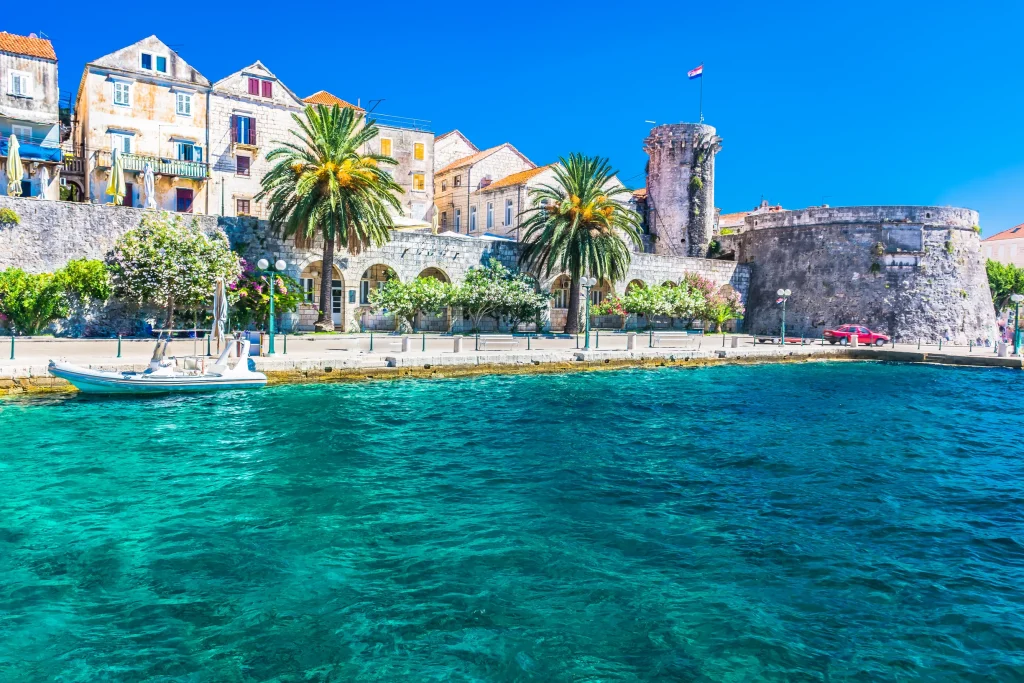
Korčula by Boat: Moorings, Lumbarda Beaches & Pošip Cellars
Korcula by boat, done right: ACI marina vs town quay vs Lumbarda anchorage, the Badija swim stop, and tasting Pošip at the source. Plan your island stop.
Leer más
Updated June 2026.
This is the operator’s best time to sail Croatia 2026 guide — month-by-month for water temperature, the Mistral and Bora winds, restaurant openings, crowds, and charter rate. The textbook peak season runs late June through August; the operator’s value picks are late May, late June, and all of September. The detail below shows why.
Charter fleet begins recommissioning in late March; bookings open in April. Water temperature is 14-17°C — cool. Restaurants on the islands are opening on a staggered schedule, with Hvar town and Korčula opening earliest. Rates run 40-50% below peak. Best for skipper-led charters with experienced crews who want quiet sailing and don’t mind sweaters in the evening. Avoid for swim-week families.
Late May is the operator’s first value pick. Water warms from 18°C to 21°C across the month. Restaurants and bars are nearly all open by 15 May. Mistral wind establishes — afternoon NW thermal breeze, 12-18 knots. Rates 25-35% below peak. Late May is the quietest week of the spring on the islands, with peak conditions still building. Best for families who want shoulder pricing with summer-ready water.
June is the textbook Croatian sailing month. Water 22-24°C, reliable afternoon Mistral, long days. The first half of June is shoulder pricing (15-20% below peak); the second half ramps into peak. Late June is one of the two best value weeks of the year — close to peak conditions, sub-peak rates, manageable crowds. The Croatian school holiday kicks in 25 June, after which crowds noticeably build.
Peak month one. Water 25-27°C, daytime temperatures 32-36°C, light to moderate Mistral. All restaurants open. Marinas full — book all overnights 4-6 weeks ahead. Charter rates at full peak. The trade-off: crowded anchorages in middle Dalmatia, packed Hvar town and Vis town, fewer quiet bays available.
The watchout: very hot week. AC at anchor runs the genset; budget extra fuel.
The single busiest month of the Croatian charter season. Water at its warmest (27°C), Mistral lighter, more variable wind. Ferragosto (the Italian August holiday) brings Italian charter traffic. Croatian school holidays continue. Rates at absolute peak. Book 9-12 months ahead for first choice. Marinas need confirmed bookings, walk-up dock space is rare.
Avoid August if your priority is quiet anchorages or quick walk-up access at island restaurants. Pick August if your priority is warm water, predictable evenings, and you’ve planned the marina overnights well in advance.
The single best value month of the Croatian charter season. Water still 24-26°C through the first three weeks. Crowds gone after the first week. Mistral softens but remains usable. Restaurants and bars all open. Rates 25-30% below peak in the first half, 35-40% below by month-end.
September is the operator’s pick because three things converge: peak-quality conditions, value pricing, and quiet anchorages. The downside is shorter days — sunset moves from 19:30 in early September to 18:30 by month-end. Plan dinners earlier.
October is the operator’s judgment month. The first half is workable — water 20-22°C, restaurants still mostly open, rates 40-50% below peak. Bora risk returns — northeast katabatic gales that can shut down passages for 24-48 hours. Some operators close the fleet by 15 October; others run through to early November.
For experienced skippers who can handle a Bora delay and don’t mind cooler swims, October is a real value option. For first-time charterers, late September is the safer end-of-season pick.
Fleet is wintered. Most marinas don’t offer charter at all. Water drops to 14-16°C in winter. A handful of operators offer winter charters for filming, photography, or specialised needs; pricing varies widely.
Croatia has four named winds that shape the charter week:
— Mistral: NW thermal afternoon breeze, 12-18 knots, builds 11:00, dies 19:00. The dominant summer wind. Predictable and easy to sail.
— Bora: NE katabatic, 25-50+ knots, drops down off the mainland mountains. Rare in June-August, occasional April/May/October. Sailing is restricted during a Bora; passages plan around it.
— Jugo (Sirocco): SE warm wind from North Africa, 20-30 knots, brings heat and humidity. More common in shoulder seasons. Uncomfortable but not dangerous for the typical charter route.
— Tramuntana: N gentle winter breeze, rarely affects charter weeks.
— April: 14-17°C
— May: 18-21°C
— June: 22-24°C
— July: 25-26°C
— August: 26-27°C (peak)
— September: 24-26°C
— October: 20-23°C
— November: 17-19°C
If quality matters most: book the second week of June or the first week of September. If cost matters most: book the third week of May or the third week of September. If quiet anchorages matter most: any week in September after the 5th.
Operationally around 15 April. Bookings open earlier but most boats are still wintering until then. The first “normal” charter week is usually the first week of May.
In June-August it is statistically rare. In October-April it’s frequent. For a peak-season charter the Bora is a low-probability event that may shift one passage day. For an off-season charter the Bora is a recurring planning factor.
By the last week of May, yes — water hits 21°C and is enjoyable for adults. Early May the water is 18-19°C and cool for swims longer than 10-15 minutes.
Yes for the first three weeks. Closing begins around 25 September on the smaller islands; Hvar town, Korčula and Vis town stay open through mid-October.
For most charterers: the second week of June or the second week of September. Both deliver peak conditions with shoulder-season pricing and quieter anchorages than mid-summer.
Plan around the wind with the Split sailing routes guide.
Seis preguntas breves y, después, una respuesta real de un bróker de www.croatia-yachting.com en cuatro horas laborables.