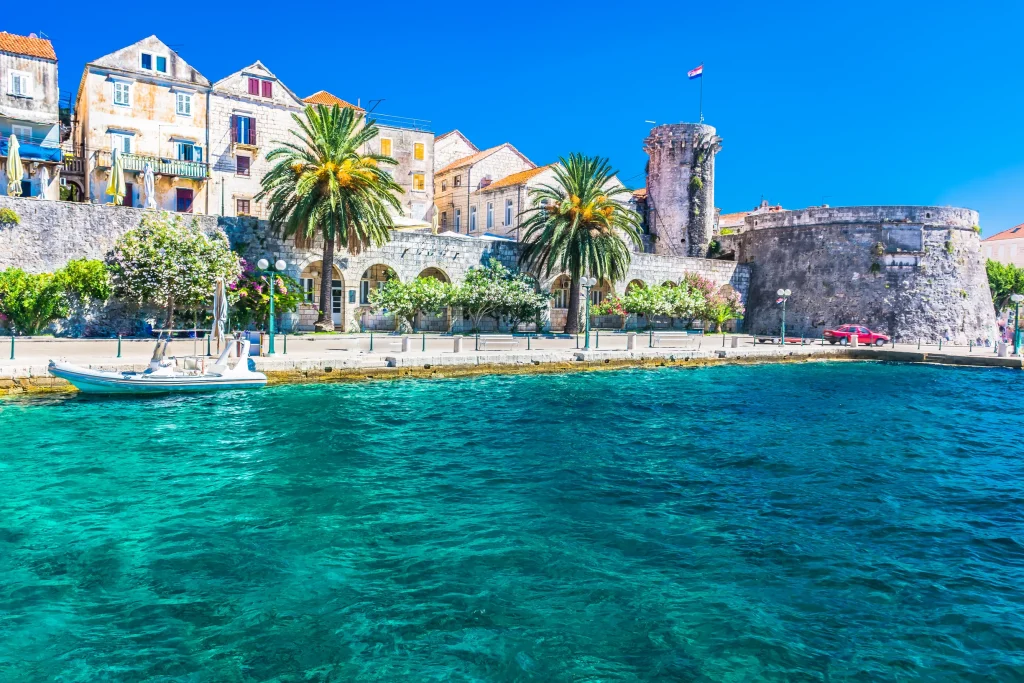
Korčula by Boat: Moorings, Lumbarda Beaches & Pošip Cellars
Korcula by boat, done right: ACI marina vs town quay vs Lumbarda anchorage, the Badija swim stop, and tasting Pošip at the source. Plan your island stop.
Ler mais
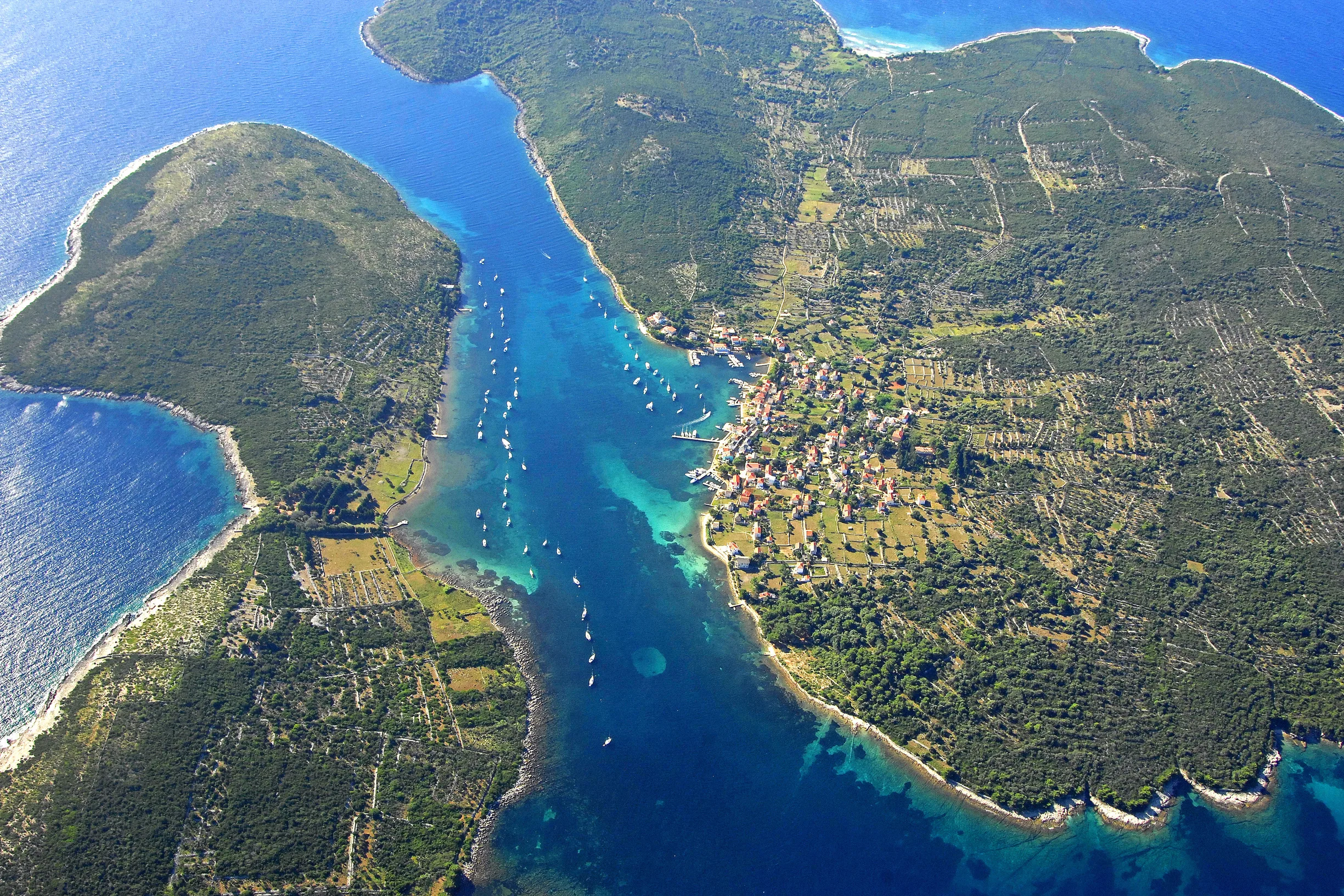
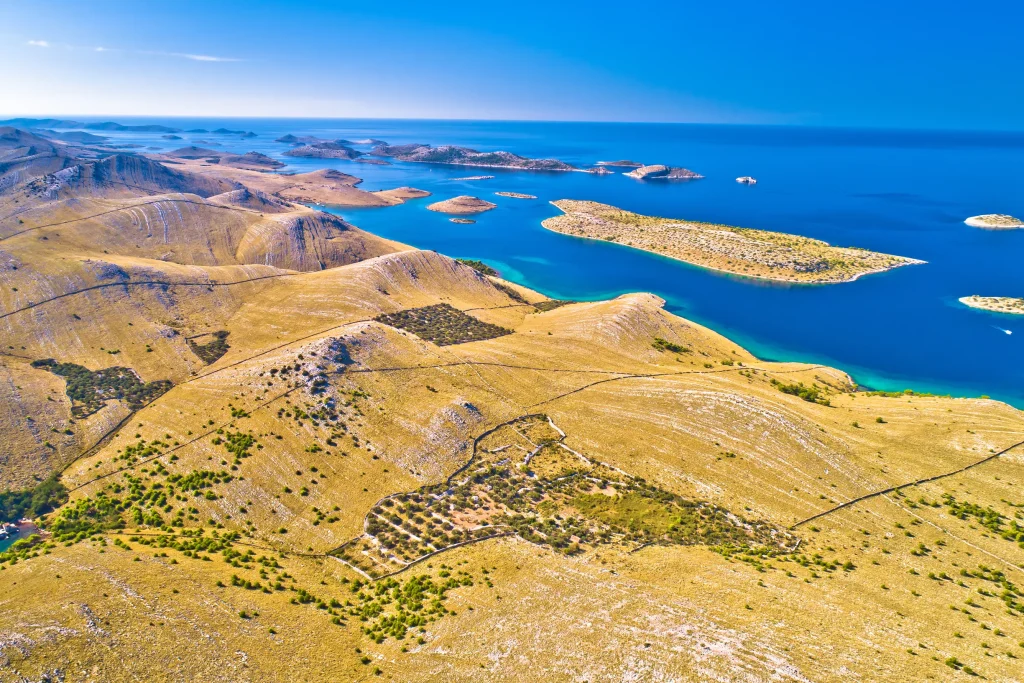
Most of the August fleet funnels straight from Šibenik to the Kornati and Hvar, which is exactly why the islands in between stay so empty — and why this corner is the best uncrowded sailing route croatia offers in high summer. Žirje, Kakan and Kaprije sit barely 12 to 18 nautical miles offshore, yet on a midweek evening you can still find a bay with two boats in it instead of forty.
This is the kind of quiet cruising ground Croatia regulars keep to themselves. The plan below runs Saturday to Saturday from Šibenik, never asks for more than four hours under way in a day, and leans on a mix of paid moorings and free anchorages so you can keep the budget sane in peak season. It pairs well with our Šibenik base guide covering the Kornati and Krka routes, which handles the national-park side of the same cruising ground.
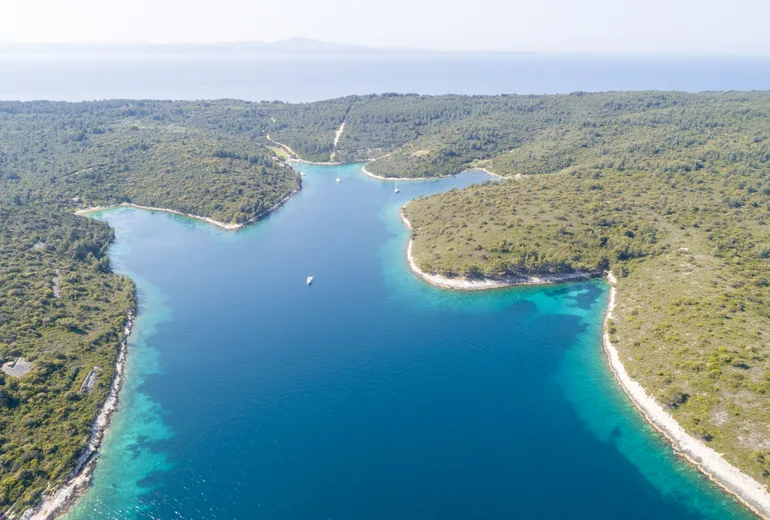
The geography does the filtering for you. Charter crews chasing the headline names — the Kornati lagoons, Hvar town, the Pakleni — sail right past Žirje, Kaprije and Kakan because those islands have no marina-resort, no nightlife strip and only a handful of restaurants. That is precisely the appeal.
Ferry links are thin too. Žirje gets a couple of daily Jadrolinija runs from Šibenik and not much else, so day-trippers never pile in. The result is an archipelago a short hop from a major base that still feels a generation behind the busy islands. In practice, the contrast is sharpest in the first and last hour of daylight, when these bays empty out completely.
Distances are short and the navigation is forgiving. The dominant summer wind is the maestral, a thermal northwesterly that fills in around midday and dies by evening — ideal for a relaxed beam reach out to the islands and a calm night at anchor. The catch is the bura, the cold northeasterly that can arrive with little warning; on a bura day the south-facing bays of Žirje are your friends and the open Kaprije channel is not. Check the forecast each morning before you commit to a leg.
Pick up your boat at Mandalina or D-Marin in Šibenik, provision properly before you leave (more on that below), and clear the St Anthony Channel under the Fortress of St Nicholas — a UNESCO-listed sea fort worth the slow pass. From the channel mouth it is roughly 13 NM southwest to Kaprije, a gentle two-and-a-half-hour sail in a typical afternoon maestral.
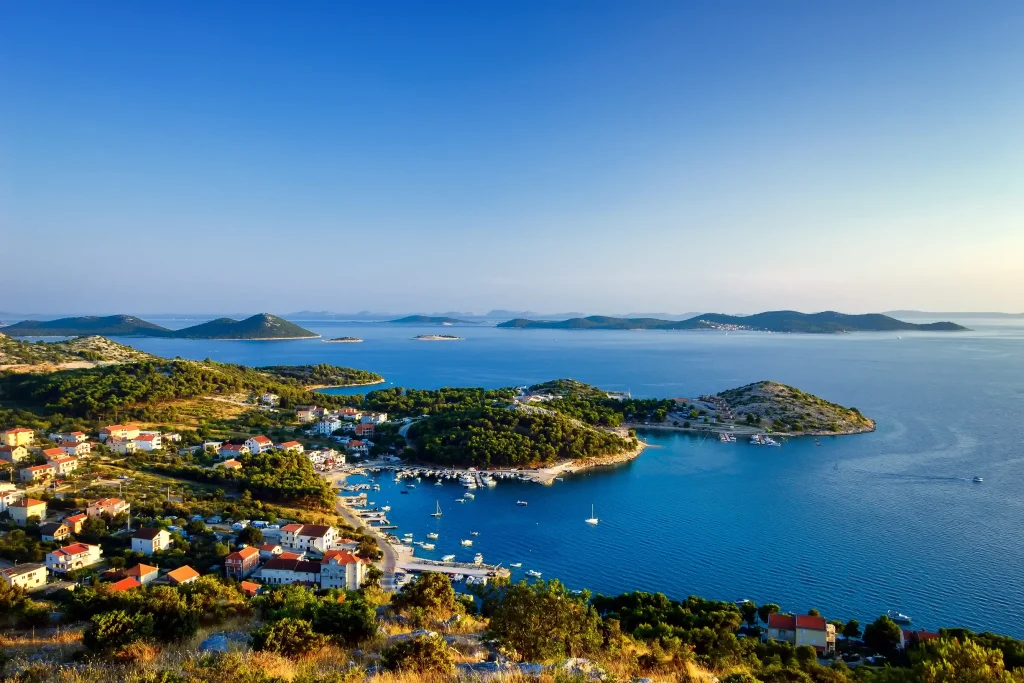
Kaprije village wraps around a small, car-free harbour. Tie up on the town quay if there is room (expect roughly €40–70 for a mid-size yacht with water and power), or drop the hook in the bay just south. The Konoba Kaprije and a couple of family-run spots near the waterfront do honest grilled fish and a respectable black risotto. It is a soft first night — quiet, walkable, and a fair sign of what the rest of the week looks like.
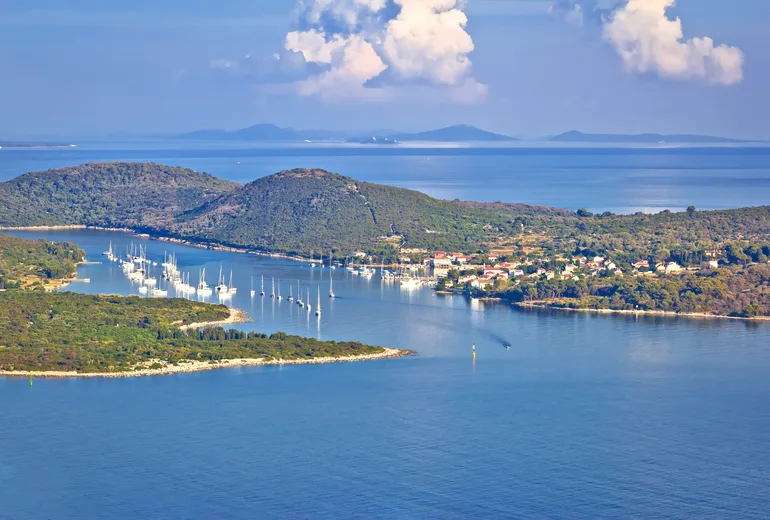
A short repositioning day, and deliberately so. Kakan is an uninhabited island between Kaprije and Žirje, ringed by sheltered coves that rarely fill even in August. The narrow channel on its northeast side gives you flat water and good holding in sand and weed at 4 to 8 metres.
There is no village here, no shop, no quay — just pine, rock and very clear water. Spend the afternoon swimming and snorkelling, then run the dinghy across to one of the small konobas that open seasonally on neighbouring islets. If you want company and a cooked dinner, a few bays have laid mooring buoys tied to a restaurant; book by VHF or phone in the morning, because the good ones go early. This is the kind of stop that makes the whole week feel remote despite being an easy sail from a city.
Holding is generally good but patchy with weed, so dig the anchor in and back down hard before you trust it. The channel funnels any northerly, so on an unsettled forecast move to the more enclosed southern coves. There is no light and no infrastructure, which means a torch, a charged VHF and a tidy ground tackle setup matter more than usual.
Žirje is the outermost inhabited island in the Šibenik group and the high point of the route. From Kakan it is a 6 to 8 NM hop to Muna or Mikavica, the two main bays on the island’s sheltered north side, both with restaurant moorings and a scattering of stone houses.
Take two nights. Day one, settle into Muna, eat at one of the konobas above the bay, and walk up to the old Byzantine and Venetian fortifications that guarded this approach to Šibenik for centuries — the views back across the channel are worth the climb. Day two, sail around to the wilder south coast and the bay of Stupica Vela, where the water turns an improbable blue over a sand bottom and the swimming is the best on the island. Provisions are minimal on Žirje, so this is where the careful shopping you did in Šibenik pays off.
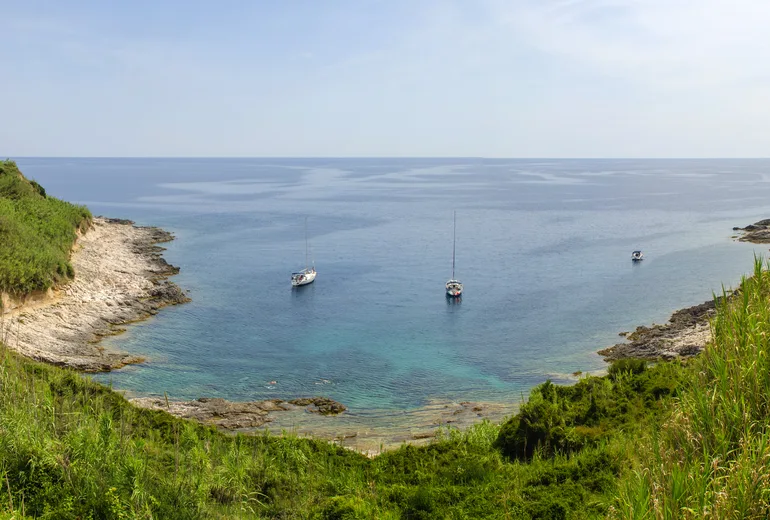
If you want a taste of the national park without committing to its mooring fees for the whole trip, today is the day. From Žirje it is a 9 to 11 NM run northwest to the southern Kornati and the Žut–Sit channel area, where you can pick up a buoy in a cove like Ravni Žakan for the night. You will pay a park entry ticket here — buy it ahead online or from the warden — and the cost is the trade-off for that stark, treeless Kornati scenery.
Prefer to keep the budget down and the crowds away? Skip the park boundary and anchor instead off Zut just outside it, or backtrack to a free cove on the Kaprije side. Either way you are nudging the route toward home without a long passage. For the deeper Kornati and free-mooring strategy, our guide to konoba dining and free moorings in Croatia is the companion read.
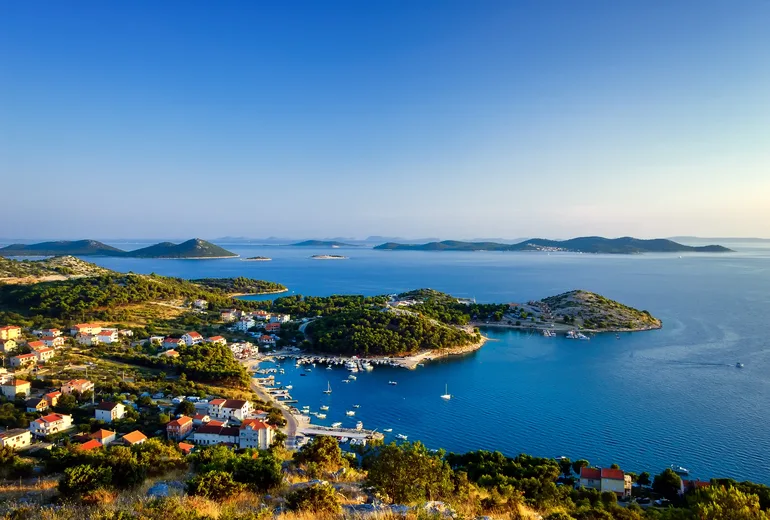
Work your way back inshore. Zlarin and Prvić are the two car-free islands closest to Šibenik, both green, both lined with old captains’ houses, and both a world quieter than the mainland marinas. Zlarin made its name on coral; you can still buy worked-coral jewellery from the few shops near the quay. Prvić Luka has the Faust Vrančić museum and a single excellent waterfront restaurant.
Moor on the town quay at either (around €40–60 in season) or anchor off and dinghy in. This is your last full evening, so eat well — the grilled škampi from the Šibenik channel are a local benchmark — and turn in early for the easy run home.
A short final leg back up the channel to your base, with time to swim once more off Zlarin before you go. If you have an hour to spare, a slow detour up the Krka estuary toward Skradin is a calm, scenic way to end the week, though you’ll want to confirm air-draft and current with the marina first.
That is a full seven days, roughly 50–55 NM total, with no single leg over four hours and most days under two. For a peak-August week it is about as far from the crush as you can get while still sleeping a short sail from an airport.
Provision in Šibenik before you leave — the big supermarkets near Mandalina are your last full stock-up, because shops on Kaprije and Žirje carry basics at best and nothing on Kakan. Carry more water than you think you need; refilling on the outer islands is not guaranteed.
Budget-wise, a week like this sits between a pure-anchoring trip and a marina-hopping one. Reckon on €40–70 a night for town quays and restaurant moorings, free for the wild coves, plus the Kornati park ticket if you cross the boundary on day five. Across the week that is markedly cheaper than a Hvar-and-Vis loop where you are paying premium marina rates most nights. When you compare a few boats for these dates, our Croatia charter fleet search lets you filter by base and budget so you can match the boat to this kind of low-key route.
Relatively, yes. Žirje, Kakan and Kaprije see a fraction of the traffic that hits Hvar or the central Kornati, especially in the evenings once day boats leave. You won’t have bays entirely to yourself every night, but you’ll routinely share an anchorage with a handful of boats rather than a fleet.
For restaurant moorings on Žirje and around Kakan, calling ahead in the morning is wise in peak season — the popular konobas tie up their buoys early. Town quays at Kaprije, Zlarin and Prvić are first-come, so arriving by mid-afternoon improves your odds. Free anchorages need no booking, just good ground tackle.
It’s a comfortable route for a confident bareboat skipper. Legs are short, the navigation is straightforward, and bailout bays are never far. The main thing to respect is the bura: on a forecast for strong northeasterlies, pick sheltered south-facing coves and don’t push an exposed crossing.
Late May to June and September are calmest and quietest, but the point of this itinerary is that it works even at the August peak. If you’re set on summer, this is the corner of Dalmatia to choose. For a fuller picture of timing, see our companion piece on planning an August sailing week in Croatia with a berth race and a plan B.
Ready to lock in dates for a quieter Adriatic week? Browse our Croatia sailing destinations to see how the Šibenik islands fit alongside the rest of the coast, and start shaping your own crowd-free route.
Seis perguntas breves e, depois, uma resposta real de um corretor do www.croatia-yachting.com em quatro horas úteis.