What a Week’s Yacht Charter in Croatia Really Costs in 2027: Line-Item Budgets
Croatia yacht charter cost per week 2027, itemised: three full budgets for sailing, motor and crewed yachts from base fee to fuel, moorings and tips.
Read more
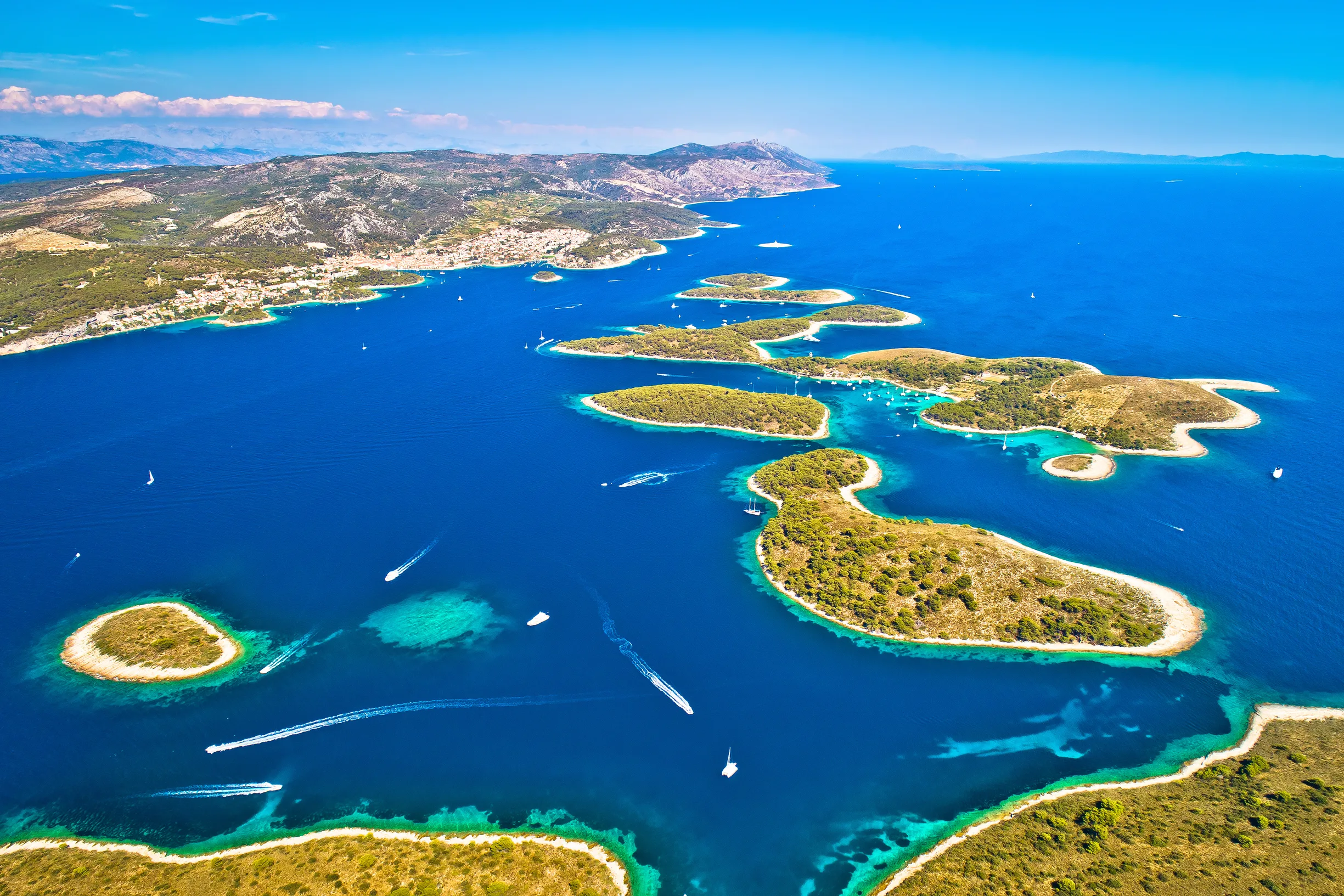
The honest answer to “bareboat vs crewed charter croatia” is that it depends on three things: whether anyone aboard holds a valid licence, how much you want to spend, and how much you care about privacy. Get those straight and the choice almost makes itself.
There are really three products, not two. Bareboat means you skipper your own boat. Skippered means you hire one professional to run it while you keep the whole boat to yourselves. Crewed means a skipper plus a host or cook, usually on a bigger yacht, with most of the work done for you. Below is what each format costs in Dalmatia, who genuinely enjoys it, and a quick self-test to settle the argument before you book.
People muddle these constantly, so it’s worth being precise. The differences aren’t just about money — they change how your week actually feels, hour to hour.
You charter the boat and nobody else comes with it. One person in your group signs as skipper and is legally responsible for the vessel, the crew list and every mooring decision. This is the classic Croatian sailing holiday: a Bavaria 46 or a Lagoon 42 out of Split or Biograd, your own playlist, your own route. The base hands over the keys, runs a check-out briefing, and waves you off.
Same boat, plus one professional skipper who lives aboard and runs the technical side. You still have the whole yacht to your group — the skipper takes a crew berth, often a forepeak or a saloon convertible, never one of your guest cabins on a smaller boat. They handle navigation, docking and weather calls; you decide where to go and when. It’s the most common upgrade for crews who want to relax rather than work.
This usually means a larger sailing yacht, a gulet or a motor yacht with at least two professionals aboard: skipper plus host/cook, sometimes a deckhand and a dedicated chef on bigger boats. Meals get cooked, the boat gets cleaned, the dinghy gets driven to the restaurant for you. It’s the closest thing to a floating boutique hotel, and it’s priced accordingly.
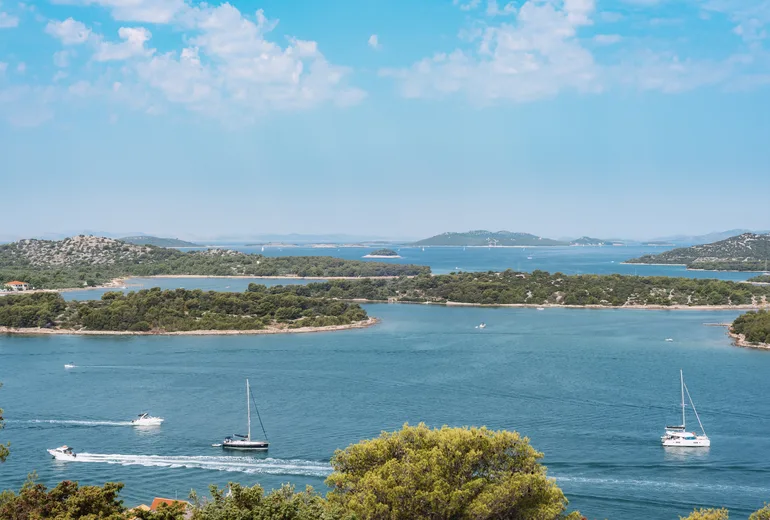
Numbers move with boat size, age and season, but the shape of the costs is consistent. Here’s the realistic spread for a peak-summer week on a mid-range boat sleeping 8.
Bareboat: the base fee only. A 2–3 year-old 46-foot monohull runs roughly €3,500–6,000 per week in shoulder season and €5,500–9,000 in late July and August. A comparable catamaran adds 40–70% on top. You pay for your own fuel, moorings, food and the transit log.
Skippered: add the skipper’s fee, which in Croatia typically lands at €1,000–1,400 per week, plus their food (you provision for one extra person, or pay a daily allowance of about €25–30). So on a €6,000 bareboat week, budget €7,200–7,800 all-in for the skipper layer before your own running costs.
Crewed: a different league. A crewed sailing yacht for 8 often starts around €12,000–18,000 per week in season; a comfortable gulet for the same group can sit anywhere from €15,000 to €30,000 depending on standard, and luxury motor yachts run far higher. Most crewed bookings also carry an APA — an advance provisioning allowance, usually 20–30% of the charter fee — that covers fuel, food, moorings and drinks, reconciled at the end.
If you want the full picture of base fees, deposits and the smaller line items that catch people out, our guide to what first-time charterers in Croatia get wrong before booking breaks them down. And for boat-by-boat pricing, the full catamaran cost breakdown for Croatia shows how the season multiplier works in practice.
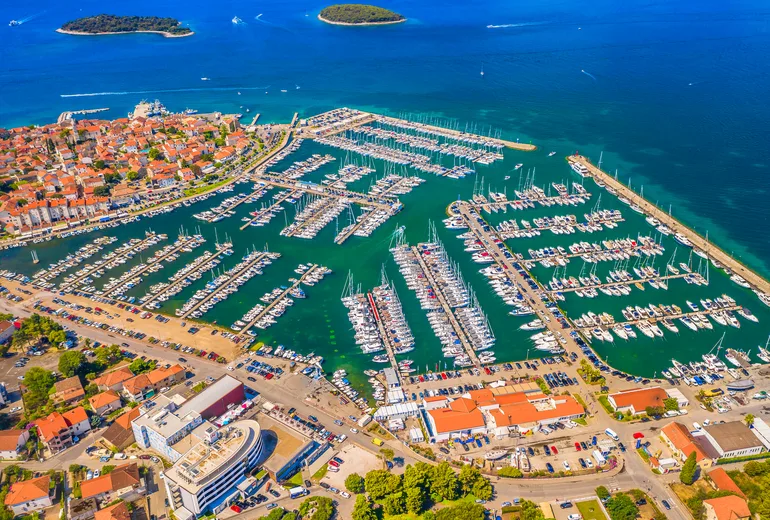
Bareboat in Croatia isn’t open to everyone. The skipper has to show a recognised sailing certificate plus a VHF radio operator’s certificate, and the base checks both at the dock. If nobody in your group holds those papers, bareboat is simply off the table — and a skippered charter becomes the practical choice rather than a luxury.
This trips up a lot of capable sailors who learned in a country whose licence Croatia treats differently. Before you assume you can take a boat out yourself, read which papers actually pass the check in our explainer on the sailing licence rules for chartering in Croatia. It’s the single most common reason a planned bareboat week quietly turns into a skippered one.
Money and licences aside, the real divide is how the week feels. Bareboat is the most private and the most demanding — every anchor drop, every weather window, every tricky stern-to in a crosswind is yours. Crews who love sailing find that deeply satisfying. Crews who wanted a holiday sometimes find by Wednesday that they’ve been working.
Skippered is the sweet spot for a lot of groups. You keep the privacy of having the boat to yourselves, but a local pro handles the stressful five percent — the gusty approach into Hvar’s town quay, the Bura forecast, the bay that looks calm but funnels wind at 3am. A good skipper also doubles as a guide: they’ll know which konoba on Vis is worth the walk and where to drop the hook out of the swell. The trade-off is a stranger aboard, though most skippers are skilled at being present when needed and invisible otherwise.
Crewed removes effort almost entirely. You wake up, breakfast is laid out, and someone else worries about the day. The cost is the highest and the cabin you share the boat with two or more crew, but for a special trip — a milestone birthday, a family reunion — it can be worth every euro. If that’s the direction you’re leaning, our look at a sample crewed luxury yacht week in Croatia shows what the days actually look like.
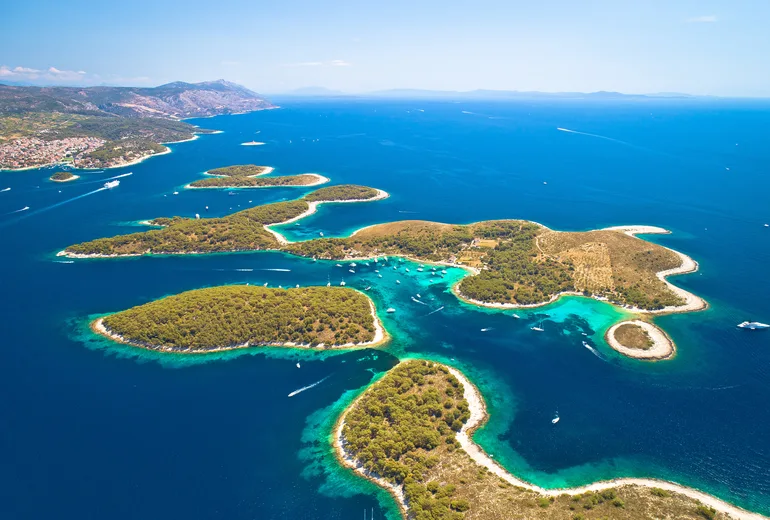
Run through these honestly. Answer most of them one way and your format is clear.
Plenty of crews split the difference. A common move is to book a skipper for just the first two or three days — enough to learn the boat, the marinas and the tricky bits of the route — then go bareboat for the rest once confidence is up. Some bases offer this; ask when you enquire. Another middle path is hiring a skipper only and provisioning yourselves, which keeps the host-and-cook costs off the bill while still removing the navigation stress.
One practical note on cabins: on a four-cabin boat, a hired skipper does not take a guest cabin — they sleep in the skipper’s berth forward or convert the saloon. On a three-cabin boat with a tight crew, confirm the sleeping arrangement before you book, because that detail decides whether a skippered week feels spacious or cramped.
Not dramatically. You add the skipper’s fee of roughly €1,000–1,400 per week plus their food. On a typical week that’s a 15–25% uplift on the base price, which many crews consider cheap insurance for the stressful parts of sailing an unfamiliar coast.
No. The named skipper must produce a recognised sailing certificate and a VHF radio certificate at check-in. Without those, your only legal options are a skippered or crewed charter. Check exactly which certificates Croatia accepts before you plan a bareboat trip.
In the dedicated skipper’s berth — usually a forepeak cabin or a saloon berth — not in one of your guest cabins on a four-cabin boat. On smaller three-cabin yachts, confirm the arrangement in advance, as it affects how much room your group has.
Skippered means one professional running the boat while you keep the whole yacht; crewed adds a host or cook (and on bigger boats a deckhand and chef) who handle meals, cleaning and service. Crewed is more comfortable and considerably more expensive, and usually involves an APA on top of the charter fee.
Many families choose skippered: a pro handles the boat so parents can watch the children, and you still have the whole yacht to yourselves. Crewed suits families who want catering and zero chores and have the budget for it.
Still weighing it up? Compare live boats and prices across all three formats on our Croatia yacht charter search, or tell us your crew and dates and we’ll match the format to your week.
Six short questions, then a real reply from a www.croatia-yachting.com charter agent within four working hours.
Your privacy
You can read more about how we protect your personal data and use cookies in our Privacy Policy.
With your consent, we and Google use cookies and similar technologies to store and access information on your device and to process personal data such as your visit to this website, your IP address and cookie identifiers. You can withdraw your consent at any time through “Cookies” at the bottom of every page.
We and Google process data for:
Website analytics and visit statistics, recordings of visits to improve the website, ad measurement and remarketing, storing and accessing information on your device