What a Week’s Yacht Charter in Croatia Really Costs in 2027: Line-Item Budgets
Croatia yacht charter cost per week 2027, itemised: three full budgets for sailing, motor and crewed yachts from base fee to fuel, moorings and tips.
Read more
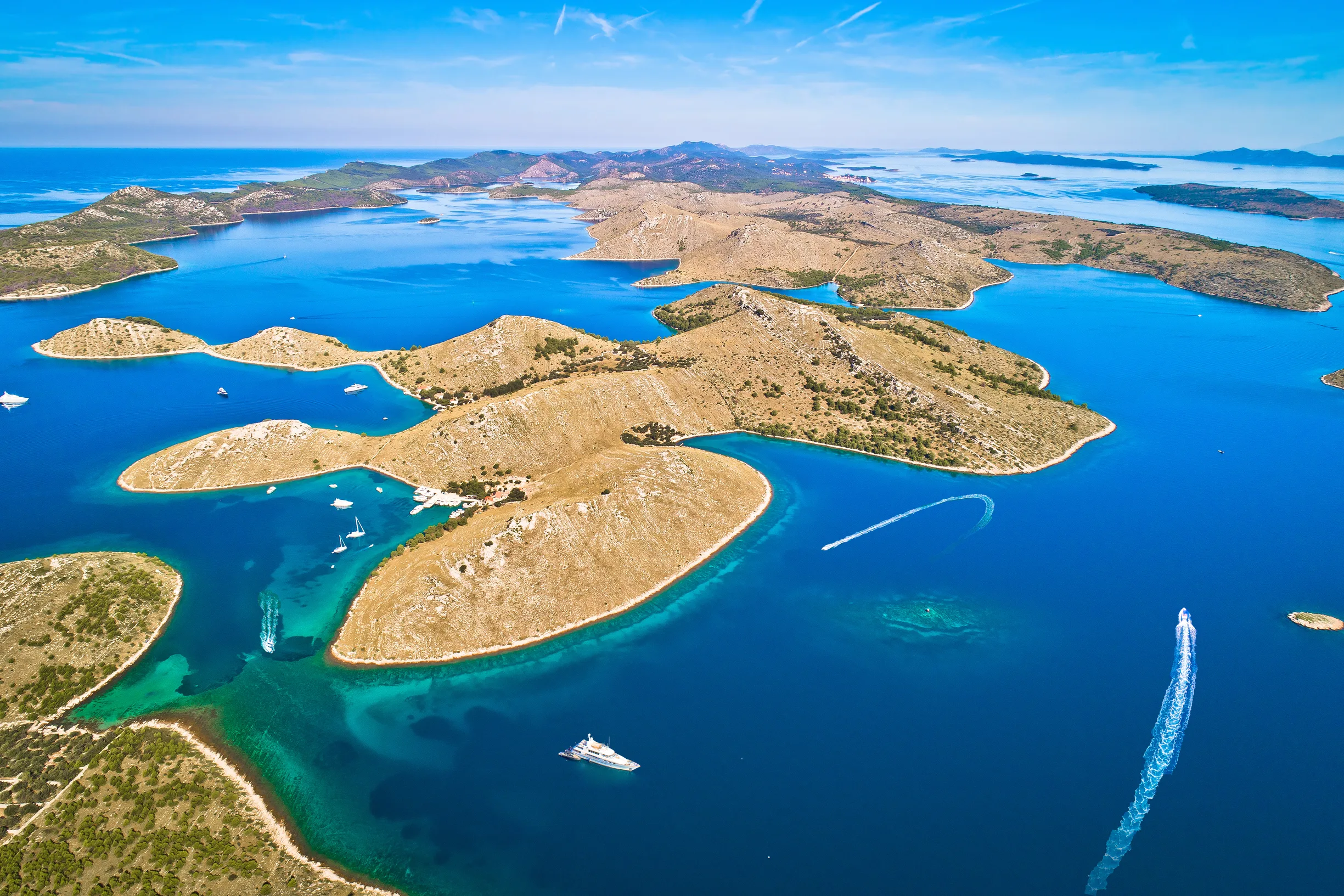
We charter boats in both Croatia and Greece, so this is not a sales pitch for one coast over the other. The honest answer to Croatia vs Greece sailing is that they reward different crews, and choosing well means being clear-eyed about what you actually want from a week afloat in 2027. Short hops and marina comfort, or stronger wind and lower prices?
Below we put the two coasts side by side on the things that decide a charter: distances, wind, cost, anchorages, food and check-in logistics. Then we give verdicts by crew type, from families to purist sailors to luxury parties. Where Croatia clearly wins, we will say so; where Greece does, the same.
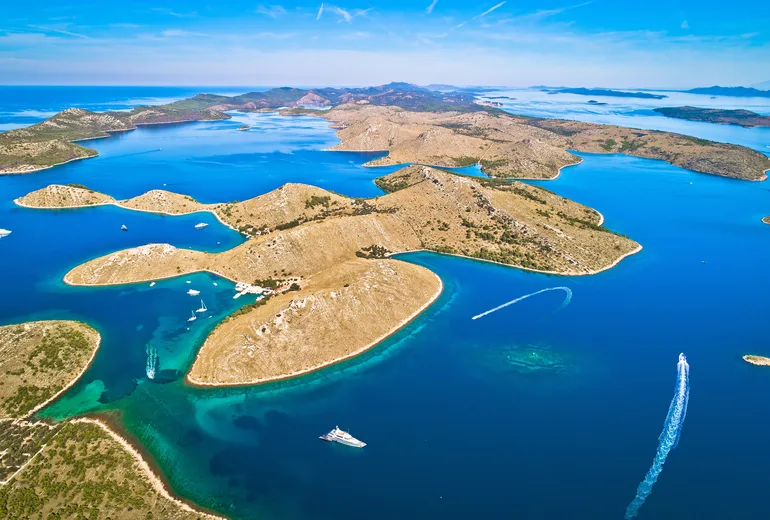
Geography sets the tone. The Croatian coast is a tight lattice of islands strung close to the mainland, so passages are short and you are rarely more than an hour or two from shelter. The popular Greek cruising grounds — the Cyclades, the Ionian, the Saronic — spread the islands further apart, so you sail longer legs in more open water, especially in the Aegean.
That single contrast cascades into everything else. Croatia’s density means dozens of marinas, easy bailouts when weather turns, and a relaxed pace of 10 to 20 nautical miles a day. Greece’s spacing means more genuine sailing, stronger and steadier wind, and a greater sense of passage-making — at the cost of fewer easy escape options when it blows.
In central Dalmatia you can build a week from Split through Brač, Hvar, Vis and back with almost no leg over 20 NM, as our central Dalmatia routes from Split lay out. In the Cyclades, hops of 25 to 40 NM between islands are normal, and the Meltemi can make them lively. The Ionian sits in between: closer islands, gentler wind, the friendliest Greek option for nervous crews.
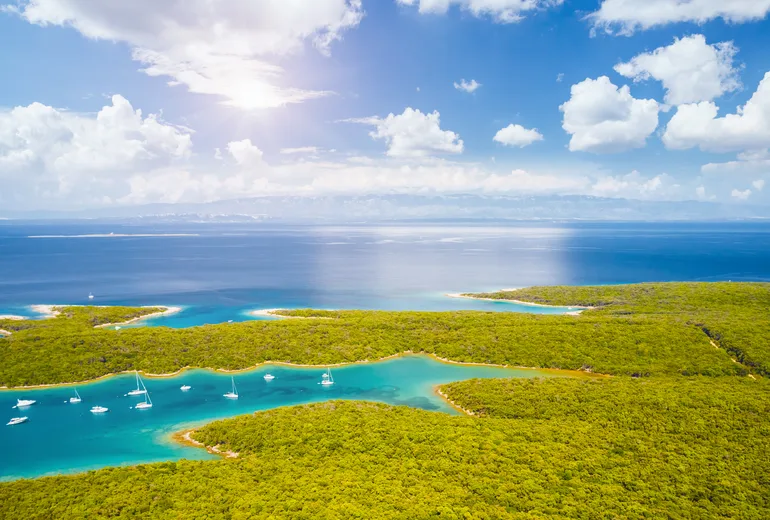
If your priority is sailing rather than motoring, Greece generally has the edge. The Aegean Meltemi blows hard and consistently through July and August, often 20 to 30 knots and sometimes more, which thrills experienced crews and unsettles beginners. The Ionian is far gentler, with afternoon breezes more like Croatia’s.
Croatia’s summer wind is the milder maestral, a thermal northwesterly that builds in the afternoon to a manageable 10 to 18 knots and dies at night. It is friendly, predictable and forgiving — excellent for relaxed cruising and families, less satisfying for crews who want to be hard on the wind all day. Croatia’s stronger winds, the bura and jugo, are weather events to avoid rather than sail for. For the full month-by-month picture on the Croatian side, our Croatia sailing weather data lays out the numbers; the same patterns favour planning around the maestral.
Greece sails you; Croatia cruises you. The Meltemi rewards a confident crew with real passages, while the Croatian maestral hands beginners a gentle afternoon breeze and a calm night at anchor.
Greece is generally cheaper across the board. Boat charter rates run roughly 10% to 20% below comparable Croatian boats, tavernas are easier on the wallet, and many crews anchor free in bays most nights. Greece’s lower marina use keeps the running total down.
Croatia costs more, and the reasons are specific. Marina fees are higher and you pay them more often because the cruising style leans on marinas and town quays — a mid-size boat can run €70 to €150 a night in a busy ACI marina in season. The transit log, tourist tax and mandatory fees add up too. The honest summary: Croatia delivers more infrastructure and comfort, and you pay for it. We break down exactly where the money goes in our guide to the hidden costs of a Croatian charter, from transit log to marina fees.
This is the clearest practical split. In Croatia you can berth in a serviced marina almost every night if you want showers, power, water and a restaurant on the quay. In much of Greece you anchor or take a town quay with fewer services, which is cheaper but less comfortable. Crews who value a hot shower and a secure berth lean Croatian; crews happy on the hook lean Greek.
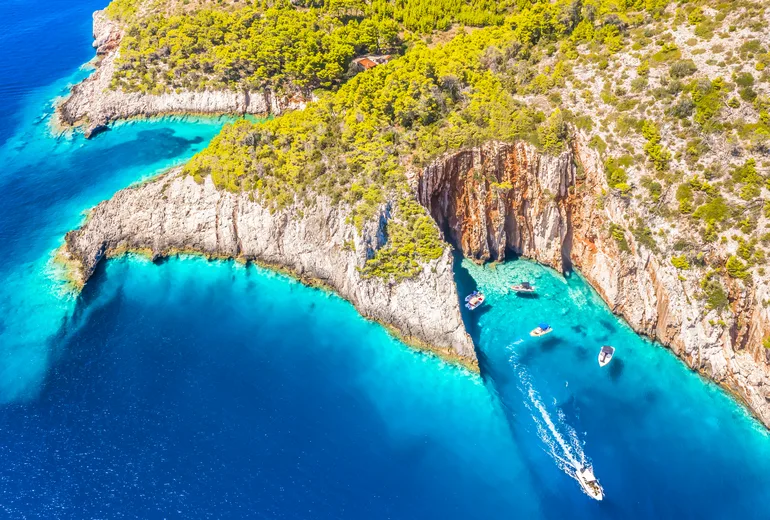
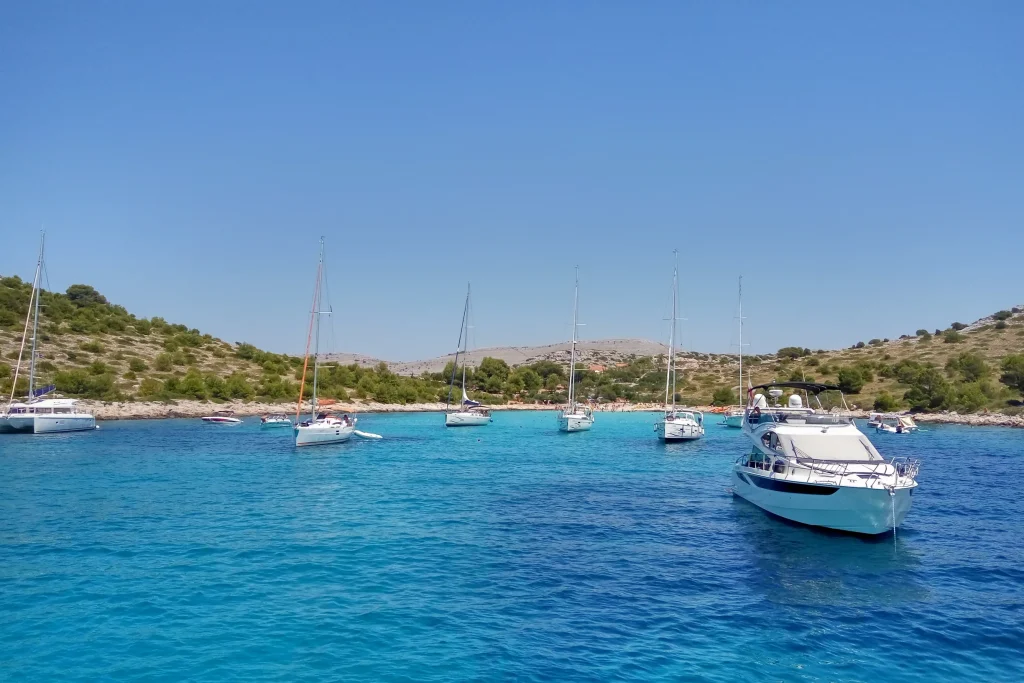
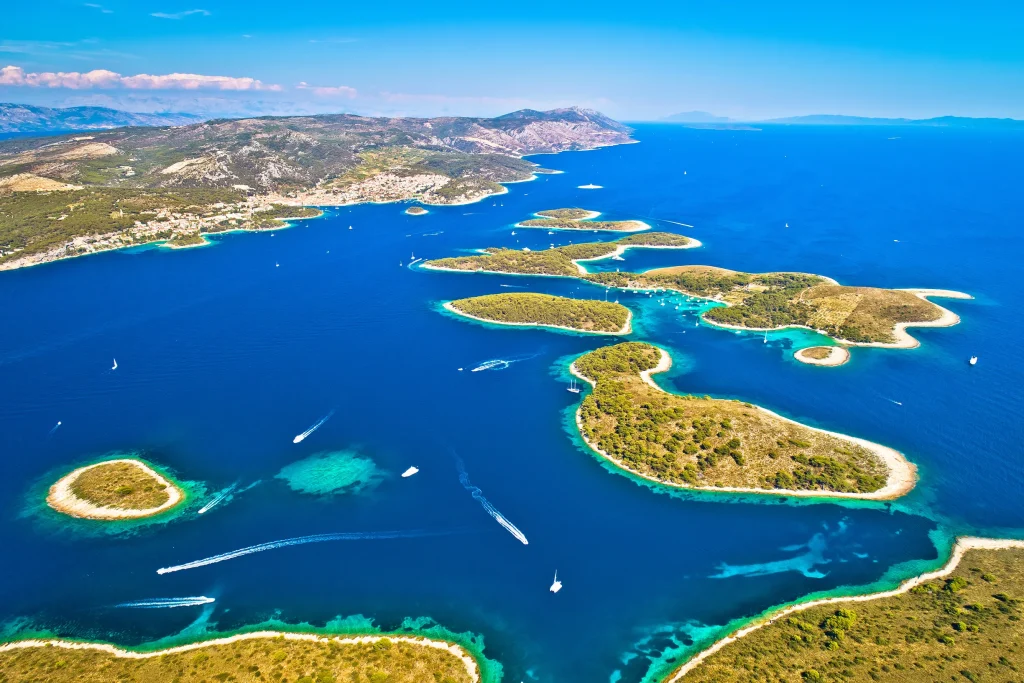
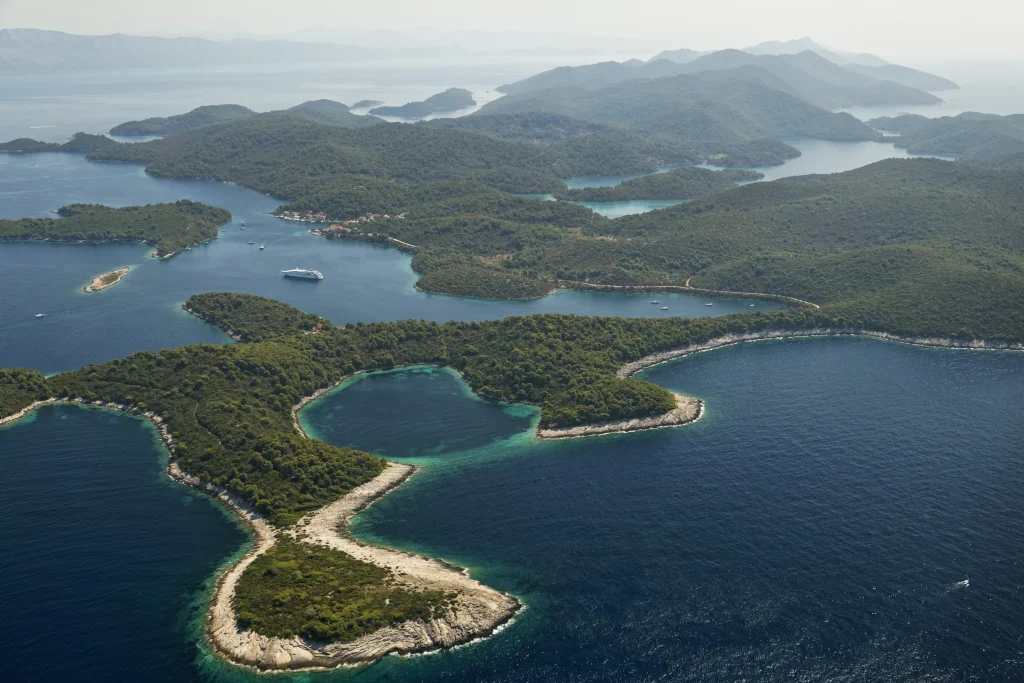
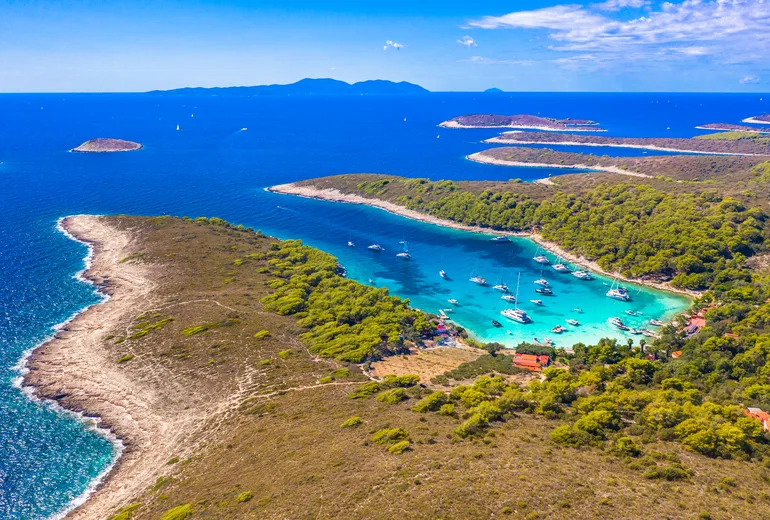
Both coasts deliver superb anchorages, with a different character. Croatia’s are pine-fringed and sheltered, often near a village konoba where you can eat ashore — think the Pakleni islands off Hvar or the Kornati bays. Greek anchorages, especially in the Cyclades, are starker, bigger and more dramatic, frequently a long dinghy ride from the nearest taverna.
On food, it comes down to taste. Croatia leans toward grilled fish, peka, Istrian truffles and Dalmatian wines like Plavac Mali and Pošip. Greece offers mezze, fresh salads, grilled octopus and its own island wines, usually at lower prices. Neither wins outright; they are simply different cuisines worth trying on their own terms.
Logistically, Croatia’s dense bases at Split, Trogir, Šibenik and Zadar make one-way and round-trip planning straightforward. Greece’s airports at Athens, Lefkada (via Preveza) and the islands serve its main bases well, though inter-island repositioning can need more thought. If Greece edges ahead for your crew, our colleagues run the Greek side directly — you can compare boats and grounds through catamaran charters in Greece.
The two coasts do not peak in quite the same way, and that affects when you should go. The Croatian season runs April to October, with the gentle maestral reliable through summer and the warmest, calmest weeks in July and August. The danger months for strong wind — bura and jugo — sit in the shoulders, so a settled June or September week in Dalmatia is about as benign as Mediterranean sailing gets.
Greece’s Aegean is the opposite story in high summer. The Meltemi is at its strongest precisely in July and August, which means the peak holiday weeks are also the windiest, sometimes uncomfortably so for less experienced crews. Shoulder-season May and late September are calmer in the Aegean and often the sweet spot there. The Ionian, by contrast, behaves much like Croatia year-round: gentle, predictable and forgiving.
If your only free weeks are July and August, that nudges the decision. Croatia in midsummer is hot, busy and friendly to sail; the Aegean in midsummer is windy and demanding. A nervous crew with fixed peak-season dates is usually happier in Croatia or the Ionian. A confident crew that can choose its weeks has more freedom either way. Croatia also opens its booking calendar early, so the best boats and weeks go fast — worth knowing whichever coast you lean toward.
The right coast depends on who is aboard:
For most first-timers and families, Croatia’s combination of short passages, settled summer wind and dense infrastructure makes the easier, more comfortable week. For confident sailors chasing wind and value, Greece earns its reputation.
Croatia is usually the gentler introduction thanks to short island hops, the predictable afternoon maestral and dense marina coverage that keeps help close. If you prefer Greece, the Ionian offers similarly forgiving conditions, while the open Aegean suits more experienced crews.
Greece is generally cheaper. Boat rates tend to run 10% to 20% below comparable Croatian boats, tavernas cost less, and many crews anchor free most nights. Croatia’s higher marina use and mandatory fees make it the more expensive coast overall.
Greece, particularly the Cyclades, where the summer Meltemi blows strongly and consistently for genuine passage-making. Croatia’s milder maestral, around 10 to 18 knots in the afternoon, is friendlier and more predictable but less thrilling for crews who want to sail hard all day.
Not as a single charter — they are separate cruising countries with different bases and paperwork. You would book each coast as its own trip. Within Croatia, however, one-way routes such as Split to Dubrovnik are common and straightforward.
Both are excellent and simply different. Croatia offers sheltered, pine-lined bays often beside a village konoba serving grilled fish and peka; Greece offers starker, more dramatic anchorages and cheaper tavernas with mezze and grilled octopus. It comes down to the experience and cuisine you prefer.
Leaning toward the Adriatic for 2027? Compare boats, bases and routes across the Croatia charter destinations and weigh them against the Greek option before you book.
Decided on Croatia? Search every boat for yacht charter in Croatia by base, type and week.
Everything we offer in Croatia, from bareboat to fully crewed, begins on the Croatia Yachting homepage.
Six short questions, then a real reply from a www.croatia-yachting.com charter agent within four working hours.
Your privacy
You can read more about how we protect your personal data and use cookies in our Privacy Policy.
With your consent, we and Google use cookies and similar technologies to store and access information on your device and to process personal data such as your visit to this website, your IP address and cookie identifiers. You can withdraw your consent at any time through “Cookies” at the bottom of every page.
We and Google process data for:
Website analytics and visit statistics, recordings of visits to improve the website, ad measurement and remarketing, storing and accessing information on your device