What a Week’s Yacht Charter in Croatia Really Costs in 2027: Line-Item Budgets
Croatia yacht charter cost per week 2027, itemised: three full budgets for sailing, motor and crewed yachts from base fee to fuel, moorings and tips.
Read more
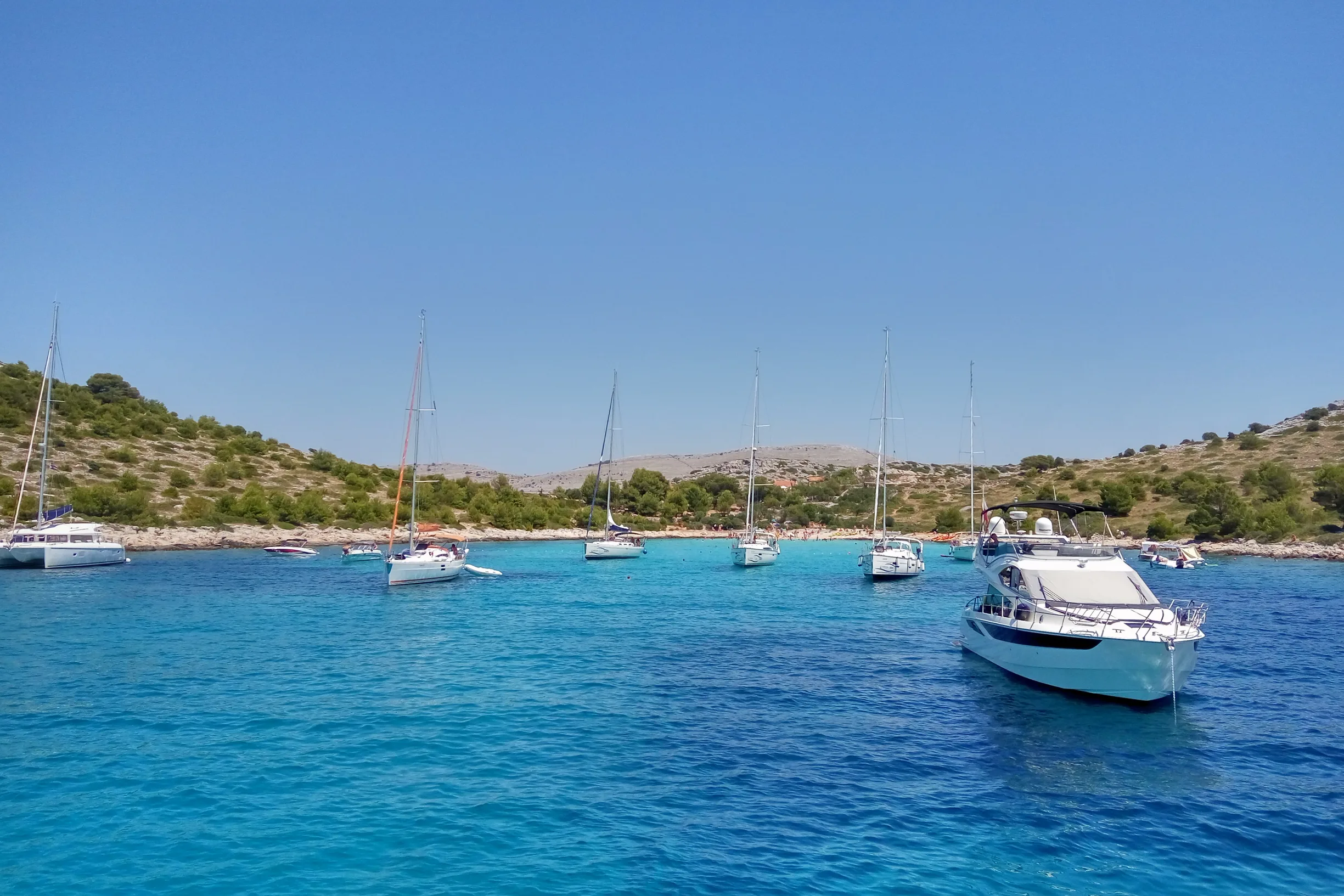
Twenty-six hours, two long flights and a body clock eight hours out of step: that is the usual journey from Sydney or Melbourne to the Dalmatian coast. It is also the best argument for a crewed yacht charter Croatia from Australia, where a captain meets you at the quay, takes your bags aboard and has the boat moving while you sleep off the flight in the shade of the aft deck.
This guide is for Australian families and groups who want the islands without the job of running a boat. It compares the three crewed formats on the Croatian coast, gulets, crewed motor yachts and crewed sailing yachts or catamarans, with weekly prices in euros and Australian dollars, the extras that sit outside the base fee, two week-long routes, the food and wine you will eat aboard, and how early to lock in a July week.
A bareboat week starts with a checklist: a licence, a VHF certificate, a boat briefing, a supermarket run for seven days of food and a first passage planned by someone who landed that morning. For a group that left Brisbane the day before yesterday, it is the part of the holiday most people would happily hand to someone else.
On a crewed boat nobody in your party needs a licence. The captain handles the paperwork at check-in, plans each day around the wind, and moves the boat in the early morning while breakfast is laid out. Provisioning is done before you arrive from a preference sheet you fill in at home, so the fridge already holds the cereal the kids eat and the Pošip you asked for. In practice the first evening aboard feels like day three of a bareboat week.
Then there is local knowledge: a Croatian captain knows which Hvar anchorage stays calm when the afternoon maestral builds, and where to moor stern-to so grandma walks ashore on a gangway instead of climbing into a tender.
The gulet is a broad-beamed wooden motor-sailer, typically 24 to 35 metres, built for comfort rather than speed. In Croatia every gulet comes with its crew; there is no bareboat version. A standard crew is a captain, a cook, one or two sailors and often a hostess. Most gulets have five or six en-suite cabins for 10 to 12 guests, and a few larger vessels are set up for 14 to 16. The big shaded aft deck with one long dining table is where these weeks are really spent. Gulets cruise mostly under engine at 8 to 9 knots and set sails on calm afternoons for the photographs as much as the speed.
A crewed motor yacht between 18 and 30 metres carries 6 to 12 guests with a captain, a stewardess and often a chef and deckhand. It covers in an hour what a gulet covers in two, which puts Vis, Lastovo or Mljet within an easy morning. It suits smaller groups and anyone for whom air-conditioning and a jet ski are part of the brief.
The most affordable way to rent a boat with crew is a sailing catamaran or monohull with a skipper and a hostess who cooks breakfast and lunch and keeps the cabins in order. A 45 to 50-foot catamaran takes 8 to 10 guests in four or five cabins, with the crew in separate bow cabins. You get real sailing, a stable platform for small children and the option to help trim the sails, at a fraction of the gulet price.
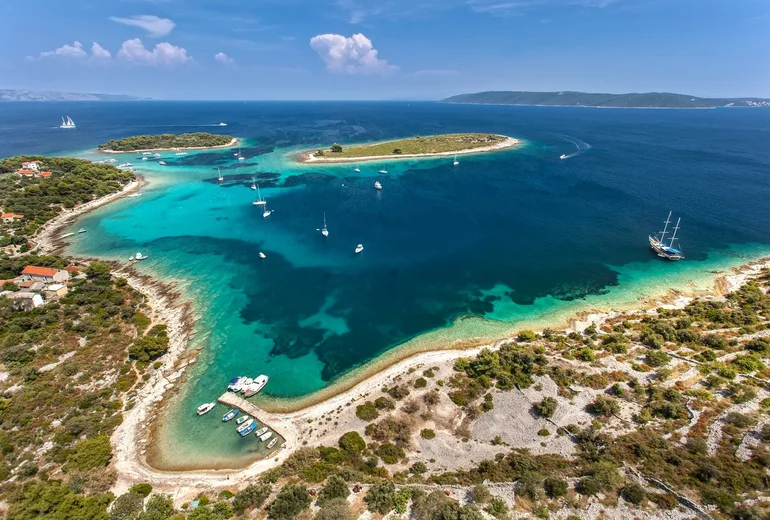
Prices on the Croatian coast are set in euros. The figures below use 1 EUR = A$1.60, the rate on 3 November 2026; the exchange rate moves, the euro price does not. July and August sit at the top of each range, and June and September typically come in 20 to 35 percent lower.
What sits inside the price varies by format, so read the quote line by line. Standard and deluxe gulets are often quoted with crew, half board (breakfast and lunch) and fuel for a set number of engine hours per day included. Luxury gulets and crewed motor yachts usually work on a plus-expenses basis: you pay an Advance Provisioning Allowance, the APA, of 25 to 35 percent of the charter fee on top, and the captain draws on it for fuel, food, drinks, marina berths and port fees, with receipts and a refund of the balance at the end. On a skippered catamaran you pay the skipper and hostess directly or through the booking, cover their meals, and buy fuel, provisions and marina nights as you go. Our breakdown of hidden costs in Croatian yacht charters lists the line items, from tourist tax to national park tickets.
Australian extended families travel in numbers. A typical July enquiry: two grandparents, three adult children with partners and five or six grandchildren aged eight to seventeen. That is twelve to fourteen people, the group a gulet is built for and too many for most catamarans.
The gulet layout helps each generation. Grandparents get an en-suite cabin, a level deck and a crew that brings the boat stern-to the town quay so they can walk ashore for an evening stroll in Korčula or Hvar. Parents get a cook, which is a bigger luxury than it sounds after a year of school lunches. Teenagers get a swim platform, a tender driven by a sailor who knows where the cliff jumps are, paddleboards and snorkel gear. If your group cares about toys, our guide to yacht charter water toys shows what to add and what it costs.
For older guests, check the cabin stairs (some gulets have steep companionways) and how often the captain plans to anchor out. We match the boat to the least mobile person in the group, not the fittest.
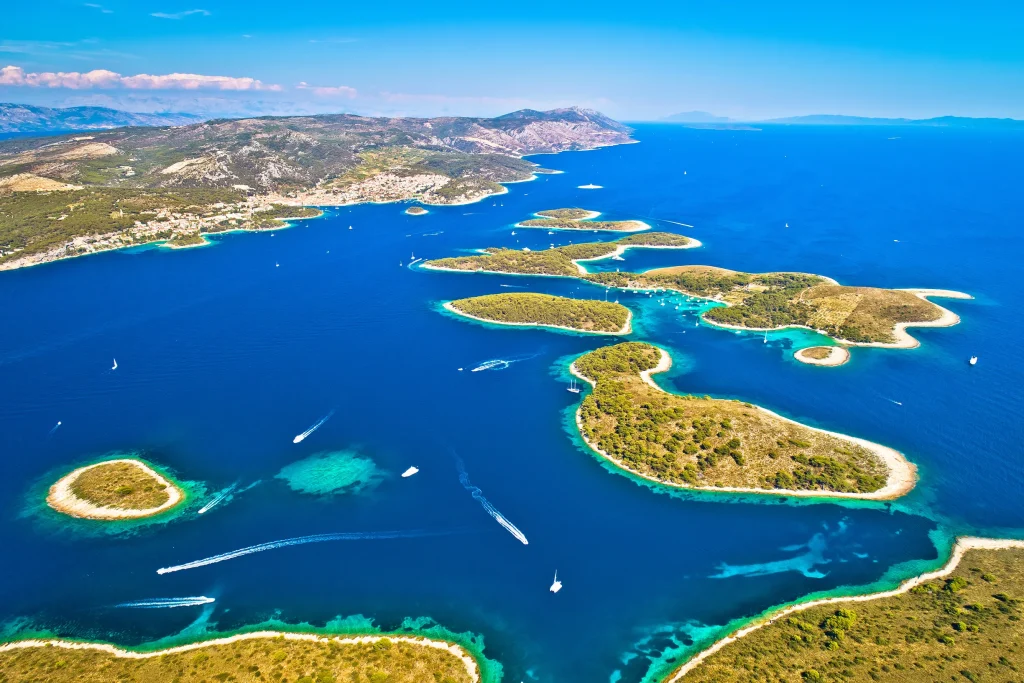
The one-way run down central and southern Dalmatia is the classic gulet route. It covers about 150 nautical miles, with most passages finished before lunch. One-way charters can carry a repositioning fee, so ask for it on the quote.
For more on the first half of the route and the anchorages around Brač and Šolta, see our post on sailing from Split.
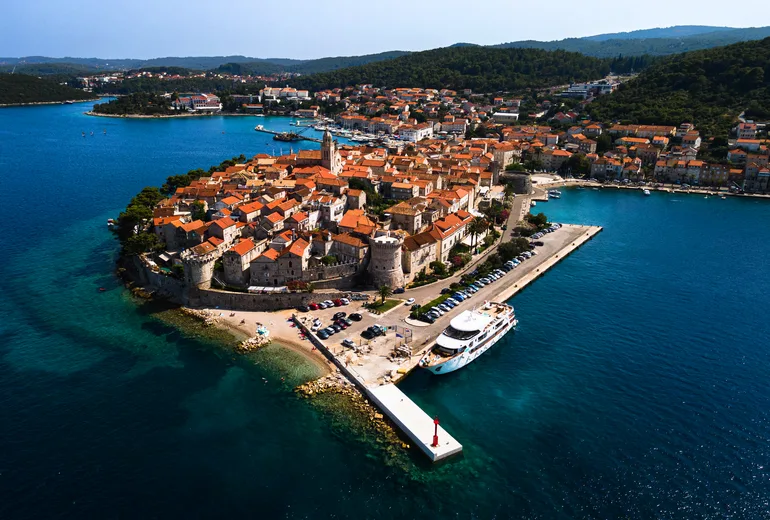
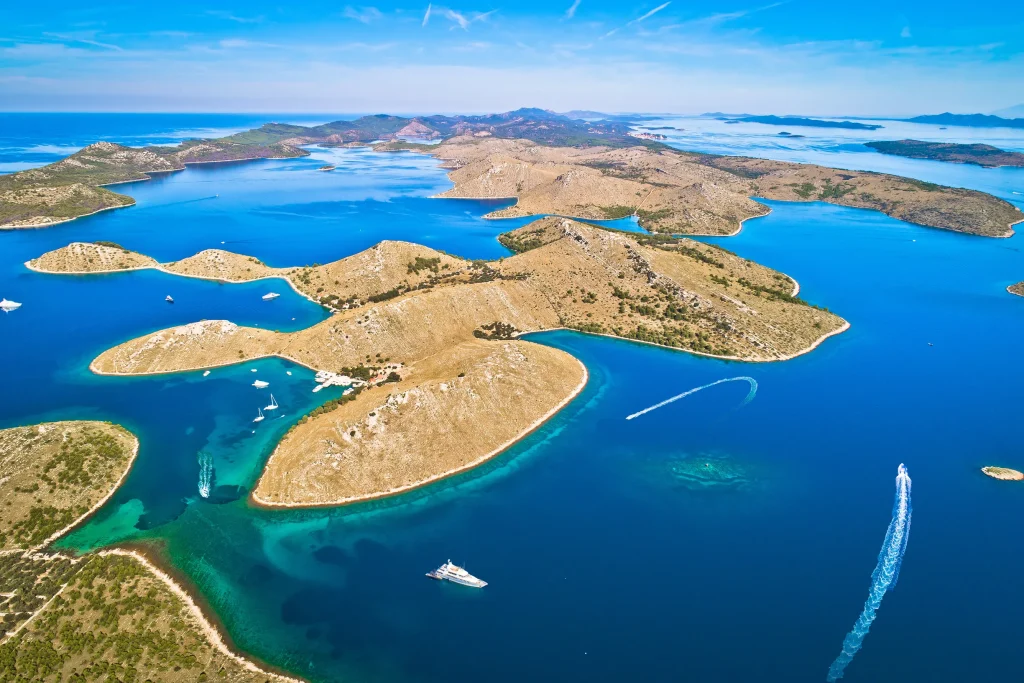
Families who want to swim more and walk through crowded towns less often prefer the north. From Zadar a gulet or motor yacht heads past Ugljan and Iž to Dugi Otok, where Telašćica bay ends at the cliffs and the salt lake of Mir, then into the Kornati National Park: 89 islands and islets of bare limestone, drystone walls and very few buildings. Days settle into a rhythm: Lojena beach on Levrnaka, a long lunch at Žut, a swim in the cove of Ravni Žakan, dinner of grilled fish or Kornati lamb at a konoba the captain has booked ahead.
Distances are short, often 10 to 15 miles a day, which is good news for anyone prone to seasickness. The trade-off is fewer towns and less nightlife, which most teenagers notice by Wednesday. Our guide to Kornati and Krka routes covers the park tickets and the best anchorages.
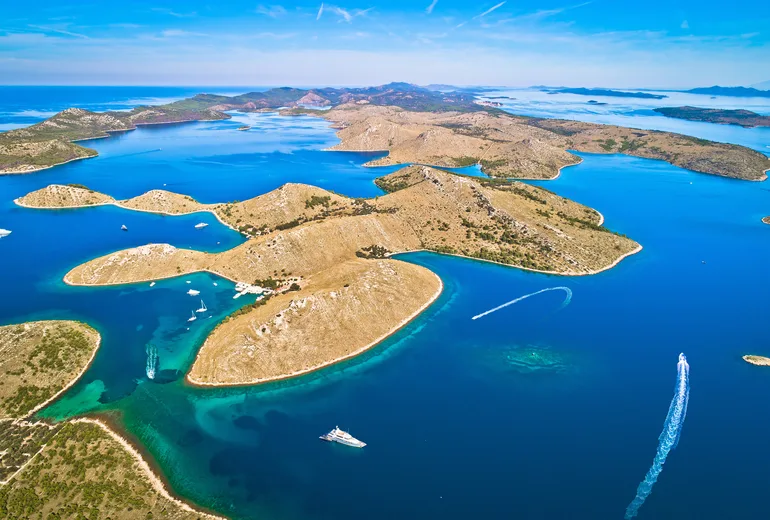
On a gulet the cook typically serves breakfast and a long lunch at anchor, with dinners ashore or aboard depending on the deal and the mood of the group. Lunch tends to be Dalmatian: fish bought that morning on the quay, blitva (silverbeet with potatoes and olive oil), octopus salad and figs.
Two dishes are worth planning around. Peka is lamb, veal or octopus slow-cooked with potatoes under an iron bell covered in embers, and because it takes hours most konobas need the order by midday; crews on Vis and Korčula know who does it best. Gregada is the Hvar fishermen’s stew of white fish, potatoes, garlic, olive oil and white wine, simple and very good after a day in the water.
For wine, ask the crew to stock Pošip, the crisp white from Čara and Smokvica on Korčula, and Plavac Mali, the big red from the steep Pelješac slopes of Dingač and Postup and from the south side of Hvar. Vugava on Vis and Grk from Lumbarda rarely leave the islands. One small warning for Australian guests: a proper flat white is still hard to find outside Split and Dubrovnik, so put oat milk on the preference sheet if it matters.
Tipping is customary rather than contractual. The usual range is around 10 percent of the charter fee on a gulet or skippered catamaran and 10 to 15 percent on a crewed motor yacht, given in euros cash in an envelope to the captain on the last evening, who shares it among the crew.
A few habits make the week easier for everyone:
The Australian winter school holidays, two weeks somewhere between late June and mid-July depending on your state, land in the busiest stretch of the Adriatic year. The sea is around 25°C and Hvar is lively until late. June and September are calmer, with warm water, spare berths in the harbours and lower prices. Our guide to the best time to sail Croatia covers the wind and crowds month by month.
Crewed boats book out earlier than bareboat yachts because there are fewer of them, and the best gulets and crews have regular guests who rebook a year ahead. For a July week, start looking 10 to 12 months out, which means now for July 2027. June and September give you more room, typically 6 to 9 months. A deposit of 30 to 50 percent secures the boat, with the balance due before departure.
Getting there takes one stop: Qatar Airways via Doha, Emirates via Dubai or Etihad via Abu Dhabi, with Turkish Airlines and Singapore Airlines as alternatives, into Zagreb, Split or Dubrovnik, around 24 to 30 hours from the east coast. Weeks run Saturday to Saturday, so landing on Thursday leaves the jet lag ashore. The Catamaran Charter Croatia guide for Australians flying to Croatia covers routes, visas and boat licences in detail.
No. Gulets in Croatia are chartered with their captain and crew, and that is the point of them. If your group has a licensed skipper and wants to sail on its own, a bareboat sailing yacht or catamaran is the option to look at instead.
No. On a crewed yacht or gulet the captain holds the licences and takes legal responsibility for the vessel. Your group only needs passports and the crew list details requested at booking.
For a mid-range gulet with 12 guests in July, expect roughly A$2,000 to A$2,900 per person for the week, before the cook’s dinners ashore, drinks and tips. Shoulder-season weeks in June or September often come in 20 to 35 percent cheaper.
Around 10 percent of the charter fee is usual on a gulet or skippered catamaran, and 10 to 15 percent on a crewed motor yacht. Give it in euros to the captain on the final evening.
Generally yes, which is why gulets are popular for multi-generation trips. Check the cabin stairs and how much the captain plans to anchor out, and bring lifejackets in children’s sizes or confirm the boat carries them.
For July, book 10 to 12 months ahead; for June or September, 6 to 9 months is usually enough. The larger gulets that sleep 12 or more are the first to go.
When you have a rough head count and a week in mind, explore Croatian charter destinations and bases and send us your group details; we will come back with gulets and crewed yachts that are still free for your dates.
Six short questions, then a real reply from a www.croatia-yachting.com charter agent within four working hours.
Your privacy
You can read more about how we protect your personal data and use cookies in our Privacy Policy.
With your consent, we and Google use cookies and similar technologies to store and access information on your device and to process personal data such as your visit to this website, your IP address and cookie identifiers. You can withdraw your consent at any time through “Cookies” at the bottom of every page.
We and Google process data for:
Website analytics and visit statistics, recordings of visits to improve the website, ad measurement and remarketing, storing and accessing information on your device