What a Week’s Yacht Charter in Croatia Really Costs in 2027: Line-Item Budgets
Croatia yacht charter cost per week 2027, itemised: three full budgets for sailing, motor and crewed yachts from base fee to fuel, moorings and tips.
Read more
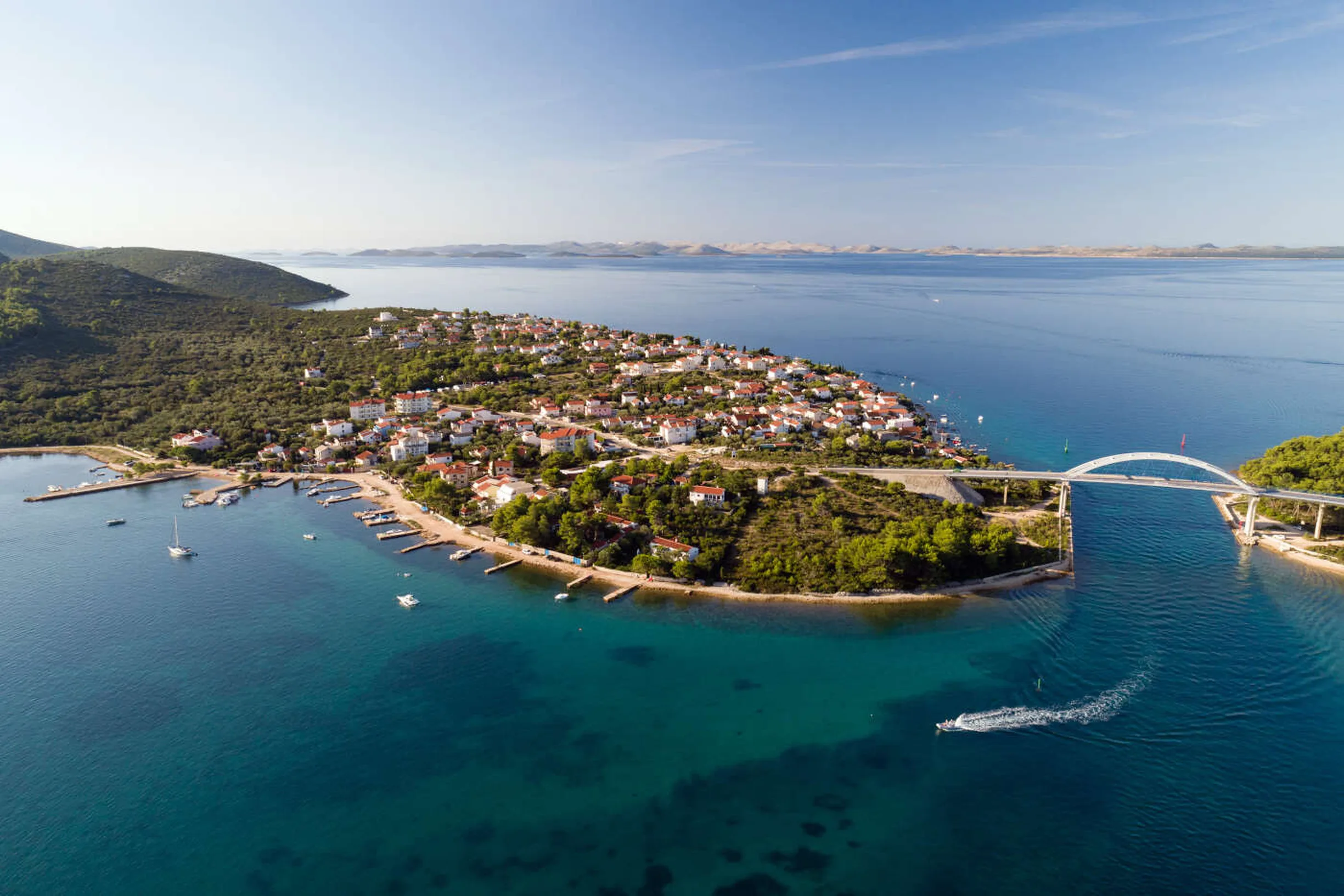
The Newark to Dubrovnik flight is around 9 hours of traveling time and if United repeats its 2026 schedule next summer there will be non-stop flights daily throughout the season. The connections from the USA for crewed yacht charter Croatia from the USA used to start with a connection in cities like Frankfurt and then a day lost to traveling but now you can fly direct to Croatia and be on the deck of your yacht within hours of arriving in Dubrovnik. Your party will arrive in Dubrovnik and after collecting your luggage will be transferred to the marina where your yacht awaits and the captain will greet you with a cold drink on the aft deck before your luggage arrives.
A Guide for American Families & Friends: Planning a summer 2027 crewed motor yacht or catamaran charter from Split or Dubrovnik. Find out what services your yacht crew will provide you on a daily basis, learn about the food served on your yacht, discover what water toys to add to your package, view budgets in both Euros and dollars for yachts of various sizes. Also, learn about chartering a one-way cruise from Dubrovnik to Split, the July 4th and Labor Day weeks and more. Will you need to tip your yacht crew? An answer to this frequently asked question by American clients is also provided.
There were daily non-stops on United from Newark to Dubrovnik in summer 2026, as well as three non-stops a week from Newark to Split. It was the only US nonstop into Split. Note that these flights have not yet been posted for 2027, so treat these as “likely” until they are posted for sale. Note also that Delta has offered non-stops in the past from JFK to Dubrovnik; check whether they return before you build plans around them.
Departures to Split on Thursdays are most useful for a crewed week as they arrive on Fridays and allow for a night in a hotel on the Riva. With a 6-hour time difference from the East Coast (9 from California) you will need a night to recover from jet lag. The following Saturday you then board your yacht in the afternoon. If you are flying from Chicago, Dallas or from the West Coast you will connect in Newark or in a European hub.
Upon arrival into Croatia, US citizens traveling by air will not require a visa to enter the country and will not complete any advance form. The fact that Croatia is a Schengen country is important to note for those planning a longer European trip and need to be aware of the 90/180 day rule that applies to the entire area, not just to Croatia. A valid passport for US citizens traveling to Croatia by air must be valid for at least three months beyond their departure date from Schengen. It is also advised to be valid for at least six months beyond their departure date from Schengen. As of April 2026, all entry into the EU will require the fingerprints and a photo to be taken by the EU Entry/Exit System the first time of entry into the EU. ETIAS (EU online travel authorisation) is not currently required for travel to Croatia and has no confirmed start date; check the EU government travel website before you fly.
A crewed motor yacht of 20 to 30m is typically crewed by a Captain, Chef, Stewardess and Deckhand. A crewed catamaran of 45 to 60ft is typically crewed by a Skipper and Hostess/Cook, with a possible 3rd crew member on the larger boats. Nobody in your party will need a boat license; the Captain holds the license for the boat and is also responsible for it.
A typical day runs like this. The captain checks the forecast at seven, moves the boat to the morning swim stop while you are still at breakfast, and drops anchor somewhere with a view. The deckhand launches the tender and the toys. Lunch is served at anchor around one, the boat moves again in the early afternoon when the maestral fills in from the northwest, and by five the crew has you either stern-to on a town quay or on a mooring buoy in a quiet bay with a restaurant ashore. The captain books those dinner tables and berths, which in July and August is real work, because Hvar, Korčula and Vis fill up by mid-afternoon.
Many American groups are pleasantly surprised by how much their yacht crew will accommodate their requests. So, if you have children that want to try cliff jumping during the day and you have an adult in your group that wants to visit a local winery, just let the captain know at breakfast and he will work around both of these requests for the rest of the afternoon. On a crewed yacht the plan belongs to you; the crew’s job is weather, safety, timing and logistics.
Food is where crewed yachts differ most, so ask early. On larger motor yachts a professional chef cooks breakfast, lunch and dinner to a menu agreed before the charter, and food and drink are paid from the Advance Provisioning Allowance (more on that below). You fill in a preference sheet at home: allergies, the kids’ breakfast cereal, whether anyone keeps kosher or eats plant-based, which wines and spirits you want stocked. Ask for American-style coffee if it matters, since a Croatian boat defaults to espresso.
On a crewed catamaran the hostess usually cooks breakfast and lunch, and dinner is ashore most nights. That suits Dalmatia well, because the konobas are the best part of the evening: grilled fish sold by weight, black risotto, octopus under the peka iron bell, a bottle of Pošip from Korčula. Provisioning for the boat is either done in advance from your list or bought on day one with the crew, and you pay the receipts. Our provisioning guide for each Croatian base shows where the crew shops and what typically costs more than at home.
One honest note on timing: Croatian dinners start late, often at half past eight. A chef aboard will serve at six if you ask; restaurants ashore will simply be quiet.
Additionally, the American groups want to have more toys on board than the European ones, and that is fine as long as the request is on the contract before the charter. The standard equipment that most of the motor yachts have is a tender with the outboard engine, paddle boards, snorkeling gear and the tube for towing. Jet skis, Seabobs, inflatable slides for the upper deck, wakeboards and the water skis are usually an optional extra.
Two practical points. Jet skis typically need a licensed operator, so the deckhand usually drives or supervises, and they are generally restricted inside national parks such as Mljet; check the rules for your route. Inflatable slides and floating platforms work best on the bigger motor yachts with a high deck. Our guide to yacht charter water toys and their prices lists what each one costs to add for a week.
Note: All prices listed on our site are contracted in euros. The price for your country is only given as a rough guide and will change with the current exchange rate. The rate has hovered around €1 = US$1.15 to 1.20; the conversions below use roughly $1.17.
In addition to the charter fee for your yacht, on most motor yachts you will pay an APA (Advance Provisioning Allowance) of 25% to 35% of the total charter fee which will be held by the captain to pay for things like fuel, food and drinks on board as well as marina berths and port fees. You will be provided with a detailed account and refunded any unused balance at the end of your charter. As a rough guide, a fast planing yacht that is constantly on the move will burn a lot of fuel, thus the route that you take will have a greater impact on the APA than anything else. Crewed catamarans are generally cheaper to run than motor yachts in terms of the APA as the provision account is typically managed on a “as you go” basis or from a small kitty with guests paying for their own food and drinks. Tourist tax and National Park tickets also apply in Croatia, see our guide to hidden costs in Croatian yacht charters for all the line items to look out for on your charter quote.
On the crewed catamarans we list, June is about 15% and September about 25% below July (from our listings, November 2026). For a large motor yacht this can amount to a five-figure sum less than in the high season.
The US calendar maps onto the Adriatic season in a slightly awkward way. Most American school summers run from early or mid June to late August, which lines up with the busiest and most expensive Croatian weeks. The July 4th week is consistently one of the first to sell out among American clients, often a year ahead for the better motor yachts, because the holiday lets working parents stretch the trip with fewer vacation days.
Labor Day week, the first week of September, is the smarter choice if your kids’ school calendar allows it. The sea is still around 24°C, the August crowds from Italy and central Europe have gone home, and many owners drop rates for September charters. The week after Memorial Day is another good window for groups without school-age children: long days, quiet anchorages and green hills before the summer heat.
Crewed yachts book out earlier than bareboat boats because there are fewer of them and the best crews have repeat guests. For July 2027, decide before the end of this winter.
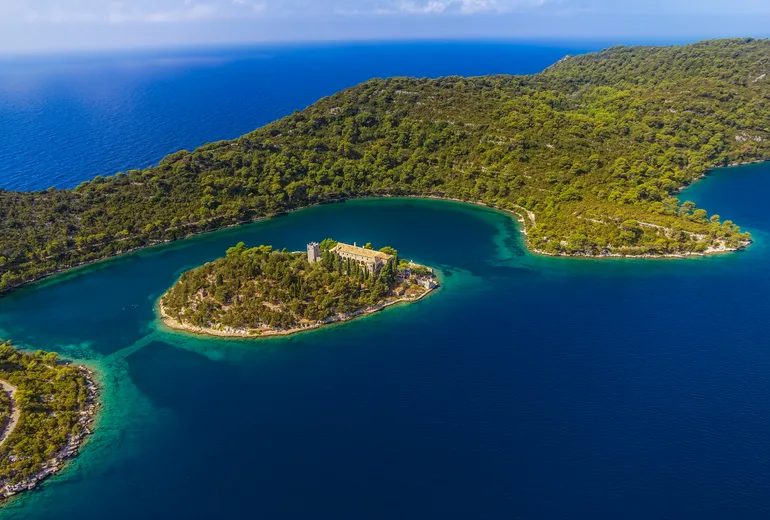
So long as the flights work, flying into Dubrovnik and then sailing north to Split to fly out or the reverse is the most efficient way for a US group to have a successful yacht charter. Expect a one-way fee for the yacht’s return; ask for it up front. Most motor yachts cover around 160 to 175 NM in a week of easy mornings. Catamarans cover similar distances but at more leisurely half days.
The southern half of the route is described in more detail in our guide to sailing from Dubrovnik and the Elaphiti islands. Families who prefer a return route can do a loop from Split instead, which also fits United’s Split schedule.
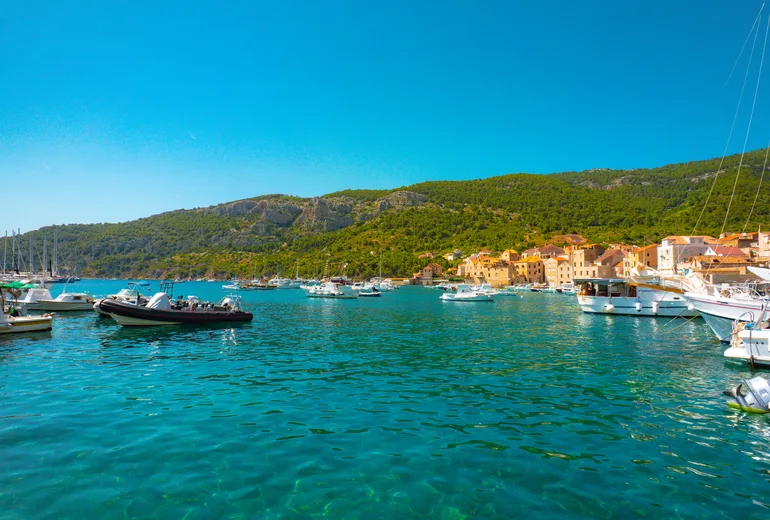
Americans arrive with a tipping culture of their own, and the honest answer is that crews in Croatia appreciate it but do not expect US restaurant levels. The usual range is 5 to 15 percent of the charter fee, depending on the size of the yacht and how hard the crew worked. Around 10 percent is common on a crewed catamaran; 10 to 15 percent is typical on a larger motor yacht with a chef. Give it in euros cash, in an envelope, to the captain on the last evening, and the captain shares it among the crew. Card or app tips do not work well on boats.
If someone has gone above and beyond, consider writing a separate note to them and handing out some extra money to say thank you. For more information on the money to tip your skipper, hostess and rest of the crew in Croatia see our article on tipping skipper, hostess and crew in Croatia. For bareboat charter information, such as what ASA and US Sailing certificates are recognized in Croatia and more, see our catamaran guide for American sailors.
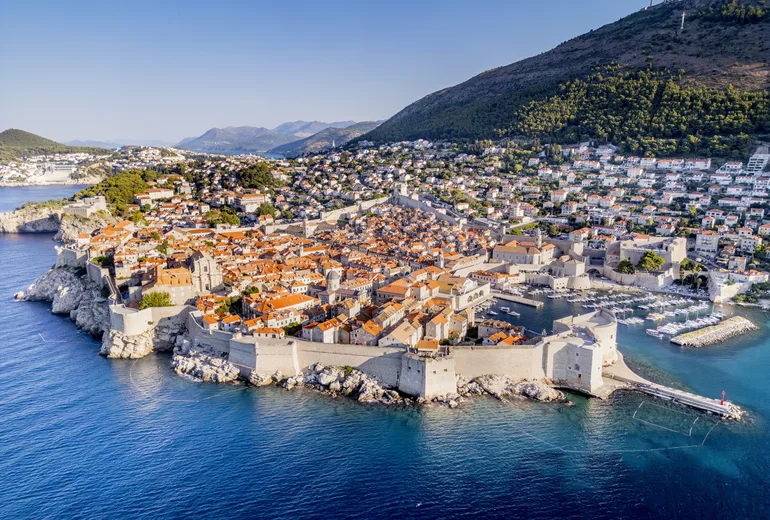
There is no visa required for Americans to travel to Croatia for a stay of up to 90 days within any 180 day period in the entire Schengen Area. ETIAS has no confirmed start date, and for now there are no requirements for Americans to participate in the system and it will not be necessary to complete any online ETIAS paperwork prior to your flight to Croatia. On first entry the EU Entry/Exit System takes your fingerprints and a photo, so allow extra time at the airport.
In Summer 2026 United Airlines offered daily flights from Newark to Dubrovnik and three times a week flights from Newark to Split. If United maintains this schedule for Summer 2027, then both routes should once again be available and we recommend that you check with United for the latest schedules before you book the yacht dates.
A crewed catamaran typically costs about €19,000 a week in June to about €22,500 in July, around US$22,200 to $26,300 (from our listings, November 2026), and a crewed motor yacht starts near €30,000 (about $35,000). Add an APA of 25 to 35 percent on most motor yachts, plus tips.
A tip of between 5% and 15% of the charter fee in euros cash is customary and given to the captain on the last day of the charter. 10% is typical for a crewed catamaran and 10% to 15% for a larger motor yacht.
Yes, one-way crewed charters between the two cities are common and fit the US flight pattern well. Expect a repositioning fee for the yacht, which should be shown on the quote.
To start, browse our Croatian charter destinations and bases for a given time of year and number of people, tell us who is travelling, and we’ll pick out crewed boats still free for your dates.
Six short questions, then a real reply from a www.croatia-yachting.com charter agent within four working hours.
Your privacy
You can read more about how we protect your personal data and use cookies in our Privacy Policy.
With your consent, we and Google use cookies and similar technologies to store and access information on your device and to process personal data such as your visit to this website, your IP address and cookie identifiers. You can withdraw your consent at any time through “Cookies” at the bottom of every page.
We and Google process data for:
Website analytics and visit statistics, recordings of visits to improve the website, ad measurement and remarketing, storing and accessing information on your device