What a Week’s Yacht Charter in Croatia Really Costs in 2027: Line-Item Budgets
Croatia yacht charter cost per week 2027, itemised: three full budgets for sailing, motor and crewed yachts from base fee to fuel, moorings and tips.
Read more
Planning a 2027 Croatian charter? A handful of changes worth knowing about have landed for the new season, and most of them touch your wallet or your calendar. This is the news digest with numbers: marina rates are up, the small-boat berth supply is tightening, ACI booking windows have shifted, and the 2027 regatta dates are set. The headline on Croatia sailing 2027 changes is simple — book earlier, budget a little more.
None of this should put you off the Adriatic. It is still one of the best-organised charter coasts in the Mediterranean. But the market has moved, and going in informed saves money and avoids the May scramble for whatever boat and berth is left. Here is what is actually different.
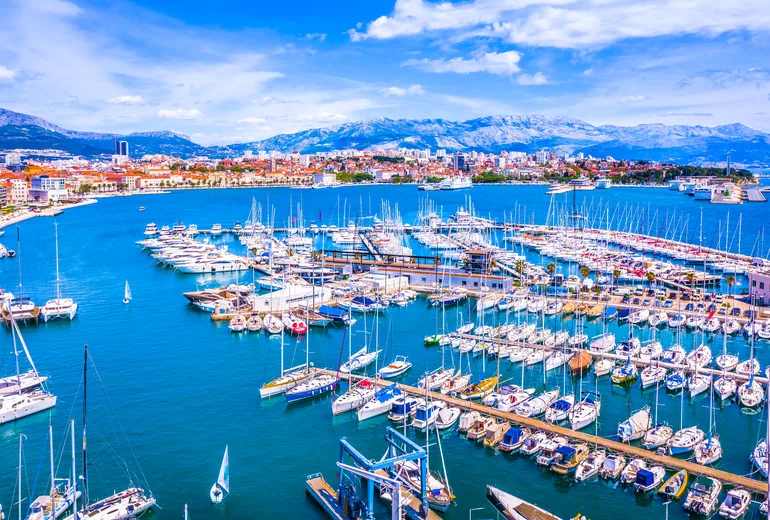
The clearest change for 2027 is cost. Many Croatian marinas have raised their nightly rates again, and across a typical week the difference adds up to roughly €60 to €100 more than the equivalent week cost last season for a mid-size boat. Peak-season berths in the busiest marinas have risen fastest, with some ACI marinas in prime spots like Split, Hvar and Dubrovnik pushing well past €100 a night for a 45-foot boat in July and August.
The drivers are familiar: high demand, energy and labour costs, and continued investment in marina facilities. The practical takeaway is to budget marina nights deliberately rather than assuming last year’s figure. Mixing serviced marinas with free anchorages and cheaper town quays is the obvious lever to keep the total in check. Our Croatian marina guide comparing ACI and private marinas breaks down where the rates land and where you save.
The increases are not uniform. ACI’s chain marinas, the default for many cruisers, sit at the higher end, especially in flagship locations like Split, Dubrovnik and Skradin. Several private marinas and smaller town-run ports have held rates closer to last season’s, so a route that mixes the two can absorb a chunk of the rise. A night on a town quay in a smaller harbour can still cost a fraction of a flagship ACI berth for similar shelter.
Three things genuinely help. Book peak marina nights ahead where reservations are possible. Plan a route that alternates marina nights with free bays and cheaper town quays. And consider shoulder-season weeks in June or September, when both boat and berth prices sit well below the July and August peak — and the marinas are calmer to manoeuvre in too.
If you charter a smaller boat, this one matters. The supply of berths sized for 6 to 12 metre yachts is tightening across the busiest marinas. New marina capacity has skewed toward larger and superyacht berths, where the margins are higher, leaving fewer slots for the smaller bareboats that make up much of the charter fleet.
In practice this means small-boat crews find fewer guaranteed berths on a walk-up basis in peak weeks, and town quays fill earlier in the afternoon. The fix is the old sailor’s habit: arrive early, around 3pm rather than 6pm, have a fallback anchorage in mind, and reserve where the marina allows it. It is rarely a crisis, but it rewards planning over improvisation.
There is an upside hidden in this for anyone chartering a bareboat in the popular 40-to-46-foot range, which sits just above the squeeze. Those berths remain comparatively well-served, so a mid-size catamaran or monohull is often easier to place each night than a smaller boat. If you have flexibility on boat size, that is worth factoring into the 2027 plan.
The pattern for 2027 is consistent across the board: more demand, higher prices, tighter supply for smaller boats. Every change points the same way — decide early and arrive early.
A scheduling note worth diarising: the ACI marina online berth-reservation system for the 2027 season opens its main booking window from 1 April. ACI runs the largest marina chain in Croatia, so the popular berths in high-demand spots get reserved quickly once the window opens, particularly for peak July and August weeks.
If your route depends on securing a berth in a specific marina on a specific night — a wedding stop, a flight connection, a must-see town — put 1 April in your calendar and book promptly. For flexible cruisers it matters less, but for anyone on a fixed itinerary it is the single most useful date this season. The broader question of timing your whole booking is covered in our guide to when to book your 2027 Croatia charter, which lays out the first-minute and early-bird windows.
Two of Croatia’s signature sailing events anchor the 2027 calendar, and both are worth knowing whether you want to join the spectacle or steer clear of the crowds it brings.
The Fiumanka regatta sails out of Rijeka in June, one of the largest sailing gatherings in the northern Adriatic, drawing a big fleet and a festival atmosphere to the Kvarner. If you are chartering in Istria or Kvarner that month, expect busier marinas around Rijeka and a lively waterfront.
The Mrduja regatta, the traditional season-closer around the Mrduja islet in the Split channel, runs in October and is a Dalmatian institution with hundreds of boats. It is a spectacle to watch from a charter boat, but the Split-area marinas and quays get crowded over the regatta weekend.
For the full picture of when to charter around the racing — to spectate or to avoid the congestion — our Croatia sailing events and regatta calendar maps the season’s racing, and our piece on spectating the Mrduja and Fiumanka regattas by charter yacht covers where to position the boat for the best view.
Pull the threads together and the advice writes itself. Prices are higher, so budget a bit more for marina nights and lean on anchorages to balance it. Small-boat berths are tighter, so arrive early and reserve where you can. ACI’s window opens 1 April, so diarise it if your route is fixed. And the big regattas in June and October will swell the crowds in their regions — plan around them either way.
The Adriatic remains a superb, well-run cruising ground, and none of these shifts changes that. They just reward the crews who plan ahead over the ones who wing it. Lock your dates and boat early to sidestep the squeeze entirely — start by browsing the 2027 Croatia charter availability while the calendar is still open.
Many marinas have raised nightly rates again, adding roughly €60 to €100 across a typical week for a mid-size boat. Peak-season berths in prime marinas like Split, Hvar and Dubrovnik have risen fastest, with some pushing past €100 a night for a 45-foot yacht in July and August.
The main ACI online berth-reservation window opens from 1 April. Because ACI runs Croatia’s largest marina chain, the popular berths in high-demand spots reserve quickly once it opens, so diarise the date if your route depends on a specific marina on a specific night.
Somewhat. The supply of berths for 6 to 12 metre yachts is tightening as new capacity skews toward larger boats. Smaller crews should arrive earlier in the afternoon, around 3pm, keep a fallback anchorage in mind, and reserve where the marina allows it.
Fiumanka sails out of Rijeka in June and Mrduja runs in the Split channel in October as the traditional season-closer. Both draw large fleets and busy waterfronts in their regions, so plan to either join the spectacle or route around the crowds.
Yes. With higher prices, tighter small-boat berth supply and strong demand, booking early secures the best boats and the first-minute discounts. The trend across every change this season points the same way: decide early and arrive early.
Six short questions, then a real reply from a www.croatia-yachting.com charter agent within four working hours.
Your privacy
You can read more about how we protect your personal data and use cookies in our Privacy Policy.
With your consent, we and Google use cookies and similar technologies to store and access information on your device and to process personal data such as your visit to this website, your IP address and cookie identifiers. You can withdraw your consent at any time through “Cookies” at the bottom of every page.
We and Google process data for:
Website analytics and visit statistics, recordings of visits to improve the website, ad measurement and remarketing, storing and accessing information on your device